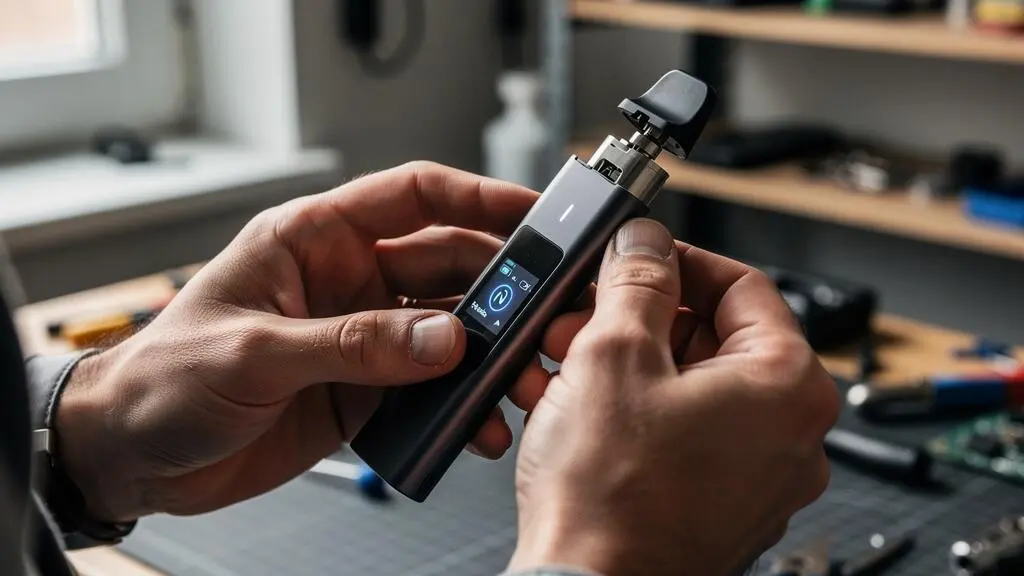
Checking vape battery health means looking for changes in runtime, charging behaviour, temperature and physical condition before they develop into a safety concern. Lithium-ion batteries gradually lose capacity as they age, but a sudden reduction in performance, unexplained overheating or visible deformation should never be dismissed as ordinary wear. For adult users in the UK, the appropriate checks depend partly on whether the device has an integrated battery or a removable cell. Both types require careful handling, although their inspection and replacement options differ.
A useful monitoring routine does not require specialist equipment. Comparing battery runtime under similar usage conditions, inspecting accessible surfaces and observing how the device charges can reveal changes worth investigating. These observations cannot establish an exact state-of-health percentage, but they can help identify when a device needs attention. Most importantly, physical warning signs such as swelling, leakage, unusual smells or excessive heat require stopping use rather than attempting further tests.
Vape Battery Health: Key Points
- Track runtime under comparable usage conditions to identify gradual capacity loss or unexpected performance changes.
- Inspect the device and any removable battery for swelling, deformation, leakage, corrosion and unusual heat.
- Stop using or charging a battery that shows physical damage, abnormal overheating, unusual smells or other serious warning signs.
- Why Does a Vape Battery Hold Less Charge as It Ages?
- How Do You Check a Vape Battery for Physical and Performance Problems?
- Removable or Built-In Battery: Which Is Easier to Monitor as It Ages?
- Which Battery Health Warning Signs Mean You Should Stop Using the Device?
- When Should Vape Battery Health Be Checked During Normal Use?
- Built-In or Removable Battery: Which Is Easier to Maintain Long Term?
- How Do You Store Spare Vape Batteries Safely Between Uses?
- How Should Spare Vape Batteries Be Carried and Stored Safely?
Why Does a Vape Battery Hold Less Charge as It Ages?
A vape battery holds less charge as it ages because the electrochemical processes inside its lithium-ion cell gradually reduce the amount of energy it can store and deliver. Repeated charging and discharging contribute to this deterioration, alongside temperature and storage conditions. The first practical indication is usually reduced runtime: a device that once lasted through a familiar pattern of use may need charging more frequently.
Two important mechanisms contribute to lithium-ion capacity loss. The first is the loss of active lithium, partly associated with the formation and rebuilding of the solid electrolyte interphase (SEI) layer at the negative electrode. The second is the loss of active electrode material, which reduces the cell’s ability to store energy. These processes occur progressively and cannot normally be assessed by looking at the outside of a battery.
Research published in Sustainability investigated capacity fade in a commercial Sony US18650VTC5 lithium-ion cell under controlled cycling conditions. The researchers examined how different state-of-charge ranges affected degradation. Their findings support the importance of charging conditions in battery aging, but the experiment does not establish a universal lifespan or replacement threshold for vaping devices. The research on lithium-ion capacity fade across charging ranges provides useful scientific context rather than a direct diagnostic test for a complete vape.
Normal aging generally produces a gradual reduction in usable capacity. A battery that delivers progressively fewer sessions over an extended period may simply be experiencing wear. By contrast, a sudden drop in runtime or highly inconsistent performance between otherwise similar sessions deserves investigation. Other factors, including higher power settings, increased usage and changes in operating temperature, can also affect runtime, so capacity loss should not be assumed from one observation alone.
Several everyday conditions can accelerate degradation:
- Repeated high-temperature exposure: Heat increases the rate of unwanted electrochemical reactions.
- Repeated deep discharge: Regularly allowing a cell to become completely depleted can place additional stress on it.
- Prolonged storage at high charge: Keeping a lithium-ion cell fully charged for extended periods can contribute to aging.
- Extended storage while fully discharged: Continued self-discharge can eventually take a cell below its safe operating range.
Charging to 100% is not automatically unsafe, and the appropriate charging routine depends on the device’s design and manufacturer’s instructions. The practical objective is to avoid unnecessary heat, repeated extreme charge conditions and prolonged periods of inappropriate storage.
A simple runtime record offers a useful baseline. Note approximately how many comparable sessions or days of use are obtained between charges. Repeat the observation under similar power settings and usage patterns. A gradual, consistent decline provides more useful information than an isolated measurement, although it cannot reveal the precise remaining capacity.
4,000 cycles
The MDPI study included 4,000 charge-discharge cycles at a 20% depth of discharge for its investigated 18650 cell. This was a controlled laboratory protocol, not a recommended number of cycles or a lifespan estimate for vape batteries.
Experimental research published in Sustainability, 2019.
Runtime is therefore a useful starting point, not a complete diagnosis. The next step is to combine performance observations with a physical inspection and a review of charging behaviour.
How Do You Check a Vape Battery for Physical and Performance Problems?
You can check a vape battery by inspecting its exterior, comparing its runtime with previous performance, observing charging behaviour and checking for unexpected temperature changes. These checks provide indirect evidence of battery condition without requiring specialist equipment. However, they cannot measure internal cell health or confirm that a battery is electrically safe, so several warning signs should be considered together.
Start with a visual inspection. Switch the device off and disconnect it from its charger before examining accessible surfaces. If the battery is removable, follow the manufacturer’s removal instructions and inspect the cell separately. Do not dismantle an integrated battery compartment or attempt to open a sealed device.
Look for the following physical changes:
- Swelling or bulging: A cell that has expanded or developed an unusual shape may be damaged.
- Deformation: Dents, distorted surfaces or a casing that no longer fits properly require attention.
- Leakage: Unusual liquid around the battery or its compartment is a reason to stop handling the device unnecessarily.
- Corrosion: Discoloured or deteriorated electrical contacts may interfere with reliable operation.
- Damaged wrapping: A torn or missing insulating sleeve on a removable cylindrical cell can expose conductive surfaces and create a short-circuit risk.
For removable cells, check that the insulating wrap and insulating ring around the positive terminal remain intact. Do not use a cell with damaged insulation. For integrated batteries, pay attention to changes in the enclosure, unusual gaps, raised panels or a charging port that appears damaged.
Performance checks provide a second source of information. Compare the device with its usual behaviour rather than relying on an isolated puff or session. Relevant changes include:
- Noticeably shorter runtime under similar settings.
- Unexpected shutdowns despite the battery indicator showing remaining charge.
- Repeated interruptions during ordinary operation.
- Charging indicators that behave inconsistently.
- Heating or device performance that differs substantially from the established baseline.
A slower-heating coil does not automatically indicate battery deterioration. Coil condition, electrical contacts, power settings and device electronics can all influence heating performance. Similarly, a battery indicator may not accurately represent remaining usable capacity. A mismatch between displayed charge and actual runtime is a reason to investigate the device, not proof of a specific internal fault.
Charging behaviour deserves particular attention. Note whether the device takes substantially longer than usual to charge, repeatedly fails to complete charging or becomes unusually hot. An apparently rapid charge or an erratic percentage display can also reflect a faulty charger, indicator or device circuit. Neither behaviour independently establishes cell degradation. Always use the charging equipment specified by the manufacturer and stop if the battery develops excessive heat or other warning signs.
The Scottish Fire and Rescue Service specifically identifies damaged batteries, unusual charging behaviour and excessive temperatures among the issues requiring attention. Its Scottish Fire and Rescue Service lithium-ion battery safety advice also covers vapes, charging precautions and safe storage.
A Practical Vape Battery Health Check
- Inspect the device exterior and accessible battery surfaces. Record any visible deformation, leakage, corrosion or damaged wrapping.
- Record the current runtime under familiar usage conditions. Note the approximate number of sessions or days between charges.
- Compare the charging behaviour with previous observations. Record unusual interruptions, charging duration changes or indicator inconsistencies.
- Check for abnormal heat, smells or unexpected shutdowns during normal use. Record any unusual behaviour without deliberately recreating a suspected fault.
- Review the observations against the manufacturer’s instructions. If a serious warning sign appears, stop using and charging the device rather than continuing the assessment.
These checks also have practical limitations: they identify reasons for caution but do not produce a laboratory measurement of remaining capacity. Battery construction determines which inspection methods are available, making the distinction between removable and integrated designs particularly important.
Removable or Built-In Battery: Which Is Easier to Monitor as It Ages?
A removable vape battery is generally easier to monitor physically because the cell can be taken out, inspected separately and replaced when necessary. A built-in battery is more difficult to assess independently because its condition must be inferred from the device’s runtime, charging behaviour and exterior. Neither design automatically provides a more accurate health assessment or guarantees greater safety.
The main advantage of removable batteries is accessibility. Common cylindrical formats include 18650, 20700 and 21700 cells. Depending on the device design, a removable cell can be inspected outside the mod and replaced without necessarily replacing the entire vaping device.
This separation also helps when investigating performance problems. If a device behaves differently after a cell has aged, the battery and the mod can be considered as separate potential sources of the problem. However, this does not justify experimenting with questionable cells or using incompatible replacements. The replacement must meet the device manufacturer’s requirements for battery format, electrical characteristics and suitability.
Built-in batteries offer a different arrangement. Their enclosure and electronic management systems are designed around a specific device, and the user normally cannot access the cell directly. This reduces routine handling of the battery itself, but it also limits visual inspection and independent replacement. When runtime deteriorates, the cause could be the cell, the charging circuit or another electronic component.
The assumption that removable batteries are always safer is therefore misleading. A removable cell with damaged insulation, an incompatible specification or poor handling can introduce risks that would not necessarily arise from normal operation of a correctly maintained integrated device. Conversely, an integrated battery is not inherently safe simply because it is enclosed or electronically managed.
| Monitoring criterion | Removable battery | Built-in battery |
|---|---|---|
| Visual inspection | Cell and wrapping can be inspected separately. | Generally limited to the external device and accessible compartment. |
| Runtime monitoring | Possible through device performance records. | Possible through device performance records. |
| Independent replacement | Possible if the device supports compatible replacement cells. | Usually requires manufacturer servicing or replacement of the device. |
| Fault identification | Battery and device problems can sometimes be considered separately. | Battery and electronic faults are harder to distinguish without technical assessment. |
| Handling requirements | Requires careful protection of terminals and battery wrapping. | Requires avoiding unauthorised disassembly and following device instructions. |
The more suitable option depends on the user’s priorities. Someone who wants direct access to the cell and the option of replacing it independently may prefer a removable-battery design. Someone who prefers a self-contained device may find an integrated battery more convenient, provided its charging and maintenance requirements are followed.
Whichever design is used, monitoring should lead to a clear safety decision. A battery showing serious physical or thermal warning signs should not remain in service simply because its runtime still appears acceptable.
Which Battery Health Warning Signs Mean You Should Stop Using the Device?
Stop using and charging a vape immediately if its battery shows swelling, leakage, physical deformation, an unusual chemical smell, hissing, smoke or excessive heat. These signs can indicate battery damage and a potential fire hazard. A gradual reduction in runtime is different: it warrants closer monitoring, but does not by itself establish an immediate safety emergency.
Warning signs should be separated into two practical categories: performance changes that justify investigation and physical or thermal symptoms that require stopping use.
Immediate stop-use warning signs include:
- A swollen, bulging or visibly deformed battery or enclosure.
- Unusual heat when the device is idle or during charging.
- Leakage or an unusual chemical smell.
- Hissing, cracking sounds, smoke or signs of burning.
- A battery casing or insulating wrap that has been visibly damaged.
These symptoms should not be treated as ordinary battery aging. In particular, swelling indicates a physical change inside the cell. It may not always appear as an obvious bulge. On a removable cylindrical battery, an unusual rounded shape, a cell that no longer sits correctly or a damaged casing can indicate a problem. On an integrated device, a panel that lifts, an enclosure that no longer closes properly or an unusual gap may be a warning sign.
Heat requires careful interpretation. Some warmth during intensive operation can occur, depending on device power and operating conditions. However, a battery that becomes excessively hot, heats up while idle or develops unusual heat during charging should not be treated as normal. The Scottish Fire and Rescue Service identifies extremely high battery temperatures as a warning sign and advises against using or charging a device displaying concerning symptoms.
Do not attempt to confirm a suspected fault by charging the battery again, repeatedly switching the device on, pressing a swollen casing or puncturing the cell. Do not attempt to repair a damaged lithium-ion battery yourself.
If a removable battery shows signs of damage, stop using it and avoid further charging. Do not handle a hot, smoking or unstable cell unnecessarily. If it can be isolated safely without handling an immediate hazard, keep it away from combustible materials and follow the manufacturer’s and local waste authority’s instructions for damaged batteries. Do not put it in household waste or an ordinary recycling bin.
For an integrated battery, do not try to remove the cell by opening the device. Seek guidance from the manufacturer, retailer or an appropriate battery-disposal service. If the battery is smoking, burning or presents an immediate fire risk, move away, evacuate the area and contact emergency services. Do not attempt to transport an actively failing battery to a collection point.
The US Environmental Protection Agency also explains that swelling indicates battery damage and a potential fire hazard. Its EPA frequently asked questions on lithium-ion batteries provide additional guidance on damaged batteries, safe storage and appropriate recycling. Collection arrangements differ between the United States and the UK, so UK users should check their local council or an appropriate battery recycling service.
Battery safety takes priority over continued operation. A device that shows a serious warning sign should remain out of use until the appropriate manufacturer or disposal guidance has been followed.
When Should Vape Battery Health Be Checked During Normal Use?
Vape battery health should be checked regularly during normal use, with a brief physical inspection whenever a removable battery is changed and a performance review whenever runtime differs from its usual pattern. More thorough checks are also sensible after a drop, exposure to water or excessive heat, and periods of unusual storage. The ideal frequency depends on usage intensity, battery design and manufacturer guidance rather than a universal calendar interval.
Daily users accumulate charging and discharging activity more quickly than occasional users. This makes changes in runtime particularly useful to monitor. Someone who charges a device frequently can maintain a simple record of how long the battery lasts under familiar conditions and compare observations over time.
Occasional users should not assume that infrequent charging eliminates battery deterioration. Lithium-ion cells also age during storage, and prolonged periods in unsuitable temperature or charge conditions can affect their condition. Before returning an unused device to service, inspect its exterior and review the manufacturer’s charging instructions.
Some moments deserve particular attention:
- When changing a removable battery: Check the cell’s wrapping, shape and contacts before installing it.
- When replacing a coil: Take the opportunity to inspect accessible parts of the device and check for unusual heat or damage.
- When runtime changes: Compare performance under similar settings and usage patterns.
- During seasonal transitions: Check devices that have experienced significant changes in storage or ambient temperature.
- After an unusual incident: Inspect the device following a drop, water exposure or unexpected charging interruption, and stop use if damage is suspected.
Temperature changes are particularly relevant. A vape left in a sun-heated car may experience conditions very different from those in a cool indoor environment. Similarly, storing a device in direct sunlight or near a heat source can expose its battery to prolonged elevated temperatures. The EPA recommends room-temperature storage and avoiding prolonged exposure to extreme heat or cold.
Transport conditions also matter. A device carried close to the body during physical activity may become warmer than it would in a stable indoor environment. This does not automatically indicate damage, but unusual heat or a persistent change in performance warrants attention.
A simple inspection schedule can be adapted to usage without introducing unsupported cycle limits or arbitrary replacement dates:
| When | What to check | What to record |
|---|---|---|
| During routine handling | Visible damage, unusual smells or unexpected heat. | Any abnormal physical or thermal change. |
| When changing a removable cell | Wrapping, casing, shape and electrical contacts. | Condition of the cell before installation. |
| When runtime changes | Charging frequency and performance under similar conditions. | Approximate sessions or days between charges. |
| After an unusual incident | Exterior damage and abnormal device behaviour. | What happened and any subsequent warning signs. |
| Before returning to use after long storage | Physical condition and manufacturer charging instructions. | Inspection result and any required servicing. |
Monitoring is most effective when it is part of ordinary device handling rather than a response to an obvious fault. The same approach also supports longer battery life, particularly when devices are charged and stored correctly between periods of use.
Key Considerations Before Long-Term Battery Maintenance
- Battery aging is gradual, but physical deformation, excessive heat and unusual smells require immediate attention.
- Integrated and removable batteries have different replacement and inspection options, so maintenance must reflect the device design.
- Charging and storage conditions influence long-term battery performance, making manufacturer instructions essential.
Built-In or Removable Battery: Which Is Easier to Maintain Long Term?
A removable vape battery is generally easier to maintain over several years because an eligible replacement cell can extend the useful life of the device. A built-in battery requires less direct handling, but its long-term condition depends on the battery management system, charging habits and eventual servicing options. The better choice depends on whether independent replacement or a simpler integrated design is the main priority.
Battery maintenance is not the same as battery monitoring. Monitoring identifies changes in condition, while maintenance focuses on reducing unnecessary wear and keeping the device within its intended operating conditions.
For both battery types, sensible charging habits include:
- Using the charger or charging equipment recommended by the manufacturer.
- Avoiding unnecessary exposure to high temperatures during charging.
- Disconnecting the charger when charging is complete, in accordance with the device instructions.
- Avoiding repeated complete discharge when it is not required by the manufacturer.
- Not leaving a device charging unattended overnight or while away from home.
Leaving a device connected continuously is not a recommended substitute for proper charging management. Although some devices incorporate electronic charging controls, their presence does not remove the need to follow manufacturer instructions. A protection circuit should not be treated as a guarantee against every charging fault or battery failure.
Long-term storage requires additional consideration. If an integrated-battery vape will remain unused for several weeks, check its manufacturer’s instructions before putting it away. Avoid storing the device completely discharged for an extended period, because continued self-discharge may take the cell below its acceptable voltage range. A partially charged condition is generally preferable for long-term lithium-ion storage, but the exact storage charge level should come from the manufacturer rather than an assumed universal percentage.
Removable batteries offer more flexibility because the cell can be removed and stored separately if the device design permits it. However, this introduces additional responsibilities, including terminal protection, suitable storage conditions and regular inspection of the insulating wrap. A replacement cell must also be compatible with the device.
Integrated batteries make the cell less accessible. If capacity becomes inadequate or the battery develops a fault, the user may need manufacturer-approved servicing or a replacement device. This makes battery replacement support and service availability relevant considerations when choosing a device intended for several years of use.
| Maintenance factor | Removable battery | Built-in battery |
|---|---|---|
| Replacing a worn cell | Possible when compatible replacement cells are available. | Usually depends on manufacturer servicing. |
| Storage flexibility | Cell may be stored separately in a suitable protective case. | Entire device must be stored according to its battery instructions. |
| Routine handling | Requires careful cell removal and installation. | Requires less direct battery handling. |
| Long-term repairability | Potentially easier to retain the original device after cell replacement. | May be limited by battery accessibility and repair options. |
Long-term maintenance cannot reverse electrochemical aging, but it can reduce avoidable stress on the cell. For removable batteries, correct storage becomes especially important because spare cells may spend considerable time outside the device.
How Do You Store Spare Vape Batteries Safely Between Uses?
Store spare vape batteries in a dedicated, non-conductive protective case, away from direct heat, moisture and metal objects. Each removable lithium-ion cell should be protected against accidental contact between its terminals and conductive materials. For long-term storage, follow the cell manufacturer’s recommended charge condition rather than leaving it completely discharged or assuming that full charge is always the best option.
A battery case is a safety requirement in practical terms, not simply an organisational accessory. Loose cells can come into contact with keys, coins or other metal objects in a pocket, drawer or bag. If a conductive object bridges the battery terminals, a short circuit can produce rapid heating and create a fire hazard.
Suitable storage options include:
- Dedicated plastic battery holders designed for the specific cell format.
- Non-conductive silicone battery cases with individual compartments.
- Protective sleeves or pouches that prevent terminal contact.
- Original protective packaging, provided it remains intact and suitable for storage.
Do not store removable batteries loose in a drawer, handbag or pocket. Avoid containers that allow cells to move around and touch each other or other conductive objects. Each battery should be secured independently, with its terminals protected.
Temperature and humidity also influence storage suitability. Choose a cool, dry, well-ventilated location away from direct sunlight, radiators and other heat sources. Avoid leaving spare cells in a vehicle exposed to summer sunlight or in an environment where condensation and moisture may develop.
The EPA recommends room-temperature storage and avoiding prolonged exposure to extreme heat or cold. Its guidance also identifies a sun-exposed vehicle dashboard as an unsuitable storage location for lithium-ion batteries.
Charge level matters as well. A lithium-ion battery left completely discharged for an extended period can undergo further self-discharge and become unsuitable for reuse. At the other extreme, keeping a cell fully charged for a prolonged storage period can contribute to capacity degradation. Manufacturers may specify a partial state of charge for storage, but the exact recommendation depends on the cell and its application.
Do not invent a universal storage percentage or apply a generic recommendation to every removable cell. Check the battery manufacturer’s technical documentation and follow any device-specific requirements. If the battery has already been damaged, do not charge it simply to prepare it for storage.
Air travel introduces separate requirements. Under US Federal Aviation Administration rules, vaping devices and spare lithium batteries must be carried in the aircraft cabin rather than checked baggage, and spare batteries must be individually protected against short circuits. The FAA also prohibits charging vaping devices or their batteries aboard aircraft. These are US regulatory requirements, not automatically the rules applicable to every UK journey. Passengers travelling from the UK should check the applicable aviation authority and airline requirements before departure.
Storage should preserve both physical protection and battery condition. When spare cells are taken outside the home, the same terminal protection remains essential, but additional attention must be paid to movement, impact and everyday environmental exposure.
How Should Spare Vape Batteries Be Carried and Stored Safely?
Carry spare vape batteries in individual protective cases that prevent their terminals from contacting keys, coins or other metal objects. Before transport, inspect the cell’s insulating wrap, check for deformation or unusual heat and make sure the case is securely closed. These precautions are particularly important when batteries are carried in pockets, handbags or luggage.
Transport and static storage create different practical risks. At home, the main concerns include storage temperature, humidity and prolonged exposure to unsuitable charge conditions. During transport, movement and contact with other objects become more significant.
For everyday carrying, use a dedicated battery case with individual compartments. A suitable case should prevent the battery from moving freely and protect the terminals from conductive objects. Never carry an unprotected cylindrical cell loose in a pocket or bag, even for a short journey.
Before placing a removable cell in its case, inspect its exterior. A damaged insulating sleeve or exposed metal surface can increase the risk of an accidental short circuit. Do not transport a battery with damaged wrapping as though a protective case makes it safe to use. It should be taken out of service and handled according to appropriate manufacturer guidance.
Heat exposure deserves similar attention. A closed vehicle parked in direct summer sunlight can become substantially hotter than the surrounding outdoor environment. The battery should not be left on a dashboard, inside a sun-exposed glove compartment or in another location exposed to prolonged high temperatures.
Other everyday environments require care:
- Clothing pockets: Avoid loose batteries that can contact coins, keys or other objects.
- Handbags and backpacks: Use an individual battery case rather than relying on a separate compartment in the bag.
- Outdoor activities: Keep spare cells protected from moisture, impacts and prolonged heat exposure.
- Vehicles: Remove batteries from areas exposed to direct sunlight and avoid leaving them in hot parked vehicles.
- Air travel: Check the applicable aviation authority and airline requirements for devices and spare lithium-ion batteries before travelling.
The FAA provides a specific example of terminal protection through battery cases, protective sleeves, original packaging or terminal insulation. Its rules require spare batteries within the covered category to be protected individually against short circuits. These provisions should be understood within their US regulatory context, with separate checks for the requirements applicable to UK and international journeys.
A short pre-transport check helps make these precautions consistent:
- Inspect the battery wrap for tears, exposed surfaces or other damage.
- Check that the cell has no unusual swelling, deformation or leakage.
- Confirm that the battery is not abnormally hot.
- Place the cell in a dedicated non-conductive case that protects its terminals.
- Close the case securely and keep it separate from loose metal objects.
For adult users, the most reliable approach is to combine regular battery-health monitoring with correct transport and storage. Keep a record of changing runtime, follow the manufacturer’s charging instructions, and retire any battery that develops physical or thermal warning signs. When uncertainty remains, prioritise professional guidance over further testing.
How can you tell if a vape battery is losing capacity?
The most practical indication is reduced runtime under comparable usage conditions. If a device consistently provides fewer sessions or requires more frequent charging than before, its usable capacity may have declined. However, power settings, usage intensity, temperature and device electronics can also affect runtime. Compare several observations rather than relying on one charging cycle.
Can you check vape battery health without a multimeter?
Yes. You can monitor runtime, inspect accessible battery surfaces, observe charging behaviour and look for unexpected temperature changes without a multimeter. These checks provide indirect evidence only. They cannot measure internal resistance, remaining capacity accurately or the precise state of health of a lithium-ion cell.
Does a vape battery need replacing when its runtime decreases?
Not necessarily. A gradual reduction in runtime can be a normal consequence of lithium-ion aging. However, a sudden or inconsistent decline should be investigated, and physical warning signs such as swelling, leakage or excessive heat require immediate cessation of use and charging. Follow the manufacturer’s replacement and servicing instructions rather than relying on an arbitrary runtime threshold.
Is it safe to leave a vape battery unused for several months?
Long-term storage may be acceptable if the battery is undamaged and stored according to its manufacturer’s instructions. Avoid prolonged exposure to extreme temperatures and unsuitable charge conditions. Removable cells should be kept in individual protective cases, while integrated devices should be stored as specified by their manufacturer. Inspect the device before returning it to use.
What should you do with a swollen vape battery in the UK?
Stop using and charging the device immediately. Do not puncture, compress or attempt to repair the battery. For a removable cell, avoid unnecessary handling and obtain instructions for safe disposal from the manufacturer, retailer or local waste authority. Do not put lithium-ion batteries in household waste. For an integrated battery, do not attempt to dismantle the device yourself. If the battery is smoking or burning, move away and contact emergency services.