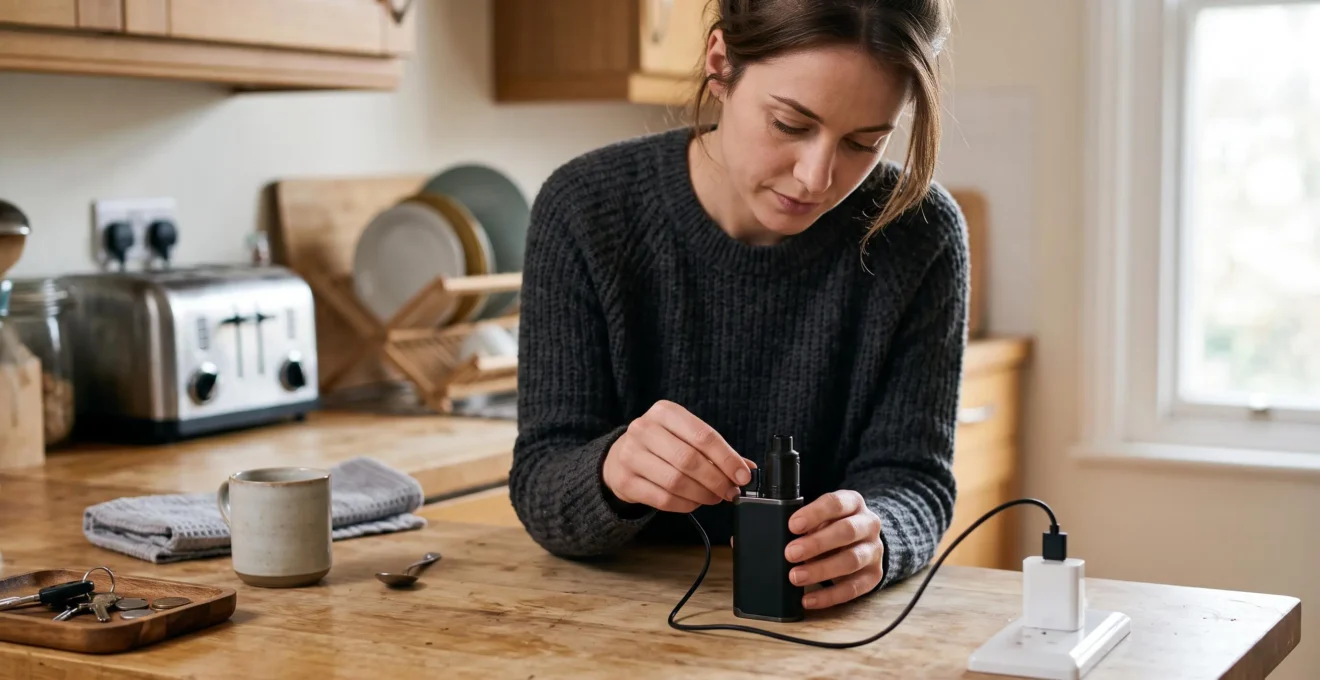
A vape battery that once lasted throughout the day may eventually need charging before lunchtime. Some loss of runtime is unavoidable: rechargeable lithium-ion cells gradually lose usable capacity as they age. However, everyday charging, temperature and power habits can influence how quickly that decline becomes noticeable.
The most useful approach is to reduce unnecessary heat, avoid repeatedly exhausting the battery, charge with manufacturer-approved equipment and store spare cells correctly. These habits can preserve usable runtime without requiring complicated battery maintenance.
Battery longevity and battery safety are closely related, but they are not interchangeable. A battery that lasts fewer hours may simply be ageing, whereas swelling, leaking, damaged insulation or abnormal heating can signal a more serious problem requiring immediate action.
For adult UK vapers using refillable devices, the practical goal is to maintain dependable performance while respecting the device’s built-in protections and the manufacturer’s instructions. The same underlying lithium-ion principles apply to many rechargeable products, although the details depend on the battery chemistry and device design.
Essential habits for longer vape battery life
- Limit heat exposure, especially during charging, intensive use and storage in hot environments.
- Prefer partial charging when practical, rather than routinely draining the battery completely or leaving it fully charged for extended periods.
- Inspect batteries regularly, protect removable cells against short circuits and replace damaged or unreliable batteries promptly.
- Why Does Heat Reduce Vape Battery Lifespan Faster Than Normal Use?
- How Do You Charge a Vape Battery to Support Longer Service Life?
- Built-In or Removable Battery: Which Is Easier to Maintain Long Term?
- Which Everyday Habits Wear Out Vape Batteries Prematurely?
- When Does Reduced Runtime Mean a Vape Battery Is Near End of Life?
- Regulated Cutoff or Manual Monitoring: Which Better Prevents Excessive Discharge?
- How Do You Check a Vape Battery for Physical and Performance Problems?
- How Should Vape Batteries Be Stored Safely at Home or While Travelling?
Why Does Heat Reduce Vape Battery Lifespan Faster Than Normal Use?
Heat accelerates unwanted chemical reactions inside lithium-ion batteries, causing gradual, largely irreversible capacity loss. A vape exposed to excessive temperatures can therefore age even when it is switched off. Heat generated during demanding use or charging adds another source of stress, making temperature management one of the most important habits for preserving battery longevity.
Inside a lithium-ion cell, chemical processes gradually consume materials involved in storing and releasing energy. Elevated temperatures accelerate some of these processes and can increase internal resistance. As a result, the battery may store less usable energy and deliver shorter runtime after repeated exposure.
Battery University‘s technical explanation of lithium-ion battery ageing identifies elevated temperature, high charge voltage and demanding discharge conditions as contributors to capacity loss.
The important distinction is between two sources of heat:
- Operational heat: current flowing through the battery during use, particularly under demanding power settings or repeated activation.
- Environmental heat: warmth from sunlight, enclosed vehicles, nearby heaters or prolonged exposure to hot surroundings, even when the device is not being used.
Environmental heat is particularly easy to overlook. A vape left on a car dashboard can become hot without being activated. Direct sunlight through a window or storage near a radiator may also expose the battery to avoidable thermal stress.
Charging a battery while it is already unusually warm can compound the problem. After prolonged or intensive use, allow the device to return to its normal operating temperature before connecting it to a charger, provided this is consistent with the manufacturer’s instructions.
Some warmth during use or charging can be normal. However, a noticeable increase from the device’s usual temperature, particularly when accompanied by shorter runtime or unusual behaviour, deserves investigation. A battery that becomes excessively hot should not continue to be used or charged.
Temperature control is not about keeping a battery artificially cold. It is about avoiding extremes and unnecessary heat accumulation, especially when the cell is charging.
How Do You Charge a Vape Battery to Support Longer Service Life?
Charge a vape battery with equipment approved for the device, preferably before it becomes completely depleted. Partial charging can reduce lithium-ion battery stress compared with repeatedly cycling between empty and full. Charge at a suitable temperature, disconnect when charging is complete and avoid leaving the device charging unattended or overnight.
Unlike some older rechargeable battery technologies, lithium-ion cells do not need an initial full discharge or a special first charge to eliminate a memory effect. Charging a new vape to 100% may be appropriate when the manufacturer recommends it, but it does not condition the battery for longer service life.
Repeated deep discharge generally places more stress on lithium-ion cells than shallower cycles. Similarly, prolonged periods at a very high state of charge can accelerate ageing, particularly when combined with heat.
Where the device provides a meaningful battery percentage indicator, a moderate charging range can be a useful practical habit. Some users aim for approximately 20–80% during ordinary use, but this is not a universal manufacturer requirement or a proven ideal range for every vape battery.
Fully charging a battery when longer runtime is needed is reasonable. The objective is to avoid unnecessary extremes as a daily routine, not to make the device inconvenient to use.
Charger compatibility matters just as much as charging frequency. Follow the device manufacturer’s instructions regarding the cable, charger, voltage and supported charging method. A higher-rated USB power supply does not automatically force excessive current into a correctly designed device; however, unsuitable, damaged or poorly manufactured charging equipment may create avoidable risks.
The UK government advice on e-cigarette battery safety recommends using the supplied charger, checking devices during charging, avoiding overnight charging and disconnecting once charging is complete.
Even devices with charging protection should not be treated as risk-free. Protective electronics can help prevent overcharging, but they do not justify charging on bedding, leaving equipment unattended or continuing to use damaged charging accessories.
A suitable routine is to charge on a clean, flat surface away from flammable materials, monitor the device and unplug it when finished. If the vape feels unusually hot, stop charging and investigate before further use.
Charging cannot reverse normal battery ageing, but sensible charging practices can reduce avoidable stress and make long-term performance more predictable.
Built-In or Removable Battery: Which Is Easier to Maintain Long Term?
Removable vape batteries are generally easier to replace when their capacity declines, potentially extending the useful life of the device itself. Built-in batteries reduce the need for users to handle individual cells and may offer simpler everyday maintenance. The better long-term choice depends on device design, replacement options, user experience and safe battery handling.
A built-in lithium-ion battery is integrated into the vape. Charging is usually managed through the device’s electronics, and users do not need to select or install individual cells. This simplicity can reduce handling mistakes.
However, battery ageing may eventually make the whole device inconvenient or unusable. If the manufacturer does not provide an authorised battery replacement service, replacing the device may be the only practical option.
Removable-battery devices offer a different maintenance model. Once the cell loses sufficient capacity, a compatible replacement can restore battery runtime without necessarily replacing the mod.
That flexibility comes with additional responsibilities.
| Consideration | Built-in battery | Removable battery |
|---|---|---|
| Routine handling | Minimal direct cell handling | Requires correct insertion, inspection and storage |
| Battery replacement | Often requires professional service or device replacement | Compatible cells can usually be replaced separately |
| Spare capacity | Usually requires recharging the device | Protected spare cells may be available where supported |
| Maintenance complexity | Generally simpler | Greater responsibility for cell selection and condition |
| Main long-term limitation | Battery serviceability | Cell compatibility and safe handling |
For adult users who prioritise straightforward operation, an integrated battery with reliable protection features may be preferable. Experienced users who understand cell handling may value the replaceability of removable batteries, particularly when using a device over several years.
Devices requiring multiple removable cells deserve special attention. Cells used together should be identical, compatible and maintained as a matched set. Buying them together, keeping them together and replacing the set together helps avoid mixing different ages, charge states or characteristics.
Never combine mismatched cells in a multi-battery device simply because their physical dimensions are identical.
Battery authenticity is another concern. Counterfeit, inaccurately labelled or questionable rewrapped cells can make it difficult to establish genuine specifications. Purchase batteries through reputable suppliers, follow the device manufacturer’s requirements and avoid cells whose provenance is uncertain.
Replaceability can extend equipment service life, but it does not automatically make an individual removable cell more durable or safer than an integrated battery.
Which Everyday Habits Wear Out Vape Batteries Prematurely?
Repeatedly draining the battery, exposing it to heat, using unnecessarily demanding power settings and charging while it is unusually warm can accelerate battery wear. These behaviours often cause gradual damage rather than an immediate failure. Their cumulative effect may explain why otherwise similar vape devices develop very different runtimes over time.
The most common battery-care mistakes are ordinary habits repeated over weeks or months. One complete discharge does not automatically ruin a healthy cell, and an occasional full charge is not inherently harmful. Repeated exposure to stressful conditions, however, can increase capacity loss.
Four habits deserve particular attention:
- Regularly running the battery flat: repeated deep discharge increases battery stress compared with shallower cycles.
- Taking many closely spaced puffs: intensive operation can increase device temperature, depending on its design and power demands.
- Leaving the device somewhere hot: sunny cars, hot windowsills and areas near heating equipment expose batteries to unnecessary environmental heat.
- Charging immediately after demanding use: beginning a charge while the device is unusually warm may add thermal stress.
Power settings also affect battery consumption. Higher wattage generally requires more electrical energy for a given activation time. In compatible regulated devices, using a moderate setting within the coil manufacturer’s recommended operating range may help extend runtime between charges.
Lowering wattage does not guarantee a particular increase in battery lifespan. Battery discharge current, resistance, device efficiency and puff duration all influence the result.
For example, two adults using the same model may get different charging intervals because one uses longer activations or a higher power setting. That difference does not automatically mean either battery is defective.
Care is also needed when interpreting warning signs. Gradually reduced runtime suggests ordinary wear; swelling, leaking, deformation or excessive heat may indicate a safety problem instead.
The most useful changes are usually simple and repeatable. However, once a battery becomes visibly damaged or behaves dangerously, changing usage habits is no substitute for removing it from service.
When Does Reduced Runtime Mean a Vape Battery Is Near End of Life?
A vape battery may be approaching the end of its useful service life when it consistently delivers much less runtime than before under comparable conditions. Rapid charge-indicator drops, increasingly frequent recharging and unexpected shutdowns can support that assessment. Reduced runtime alone is not proof of dangerous damage, but it warrants closer inspection.
Lithium-ion batteries generally age gradually. Their usable capacity declines over time, so a device that originally needed charging once a day may eventually require additional charging during the same pattern of use.
There is no universal calendar-based replacement interval that applies to every vaping device. Battery chemistry, cycle history, operating temperature, device quality and individual usage habits all affect how long acceptable performance continues.
Before deciding that the battery is worn out, compare performance under similar conditions. Changes in power level, atomiser resistance, puff duration or frequency can increase consumption even when battery health has not significantly changed.
A straightforward comparison involves three observations:
- Record the approximate runtime or number of puffs from a normal charge under your current settings.
- Compare this with earlier performance under similar settings, if a reliable baseline is available.
- Repeat the observation over several charging cycles and look for a consistent decline rather than a single unusually short session.
This provides a practical indication of usability, not a laboratory measurement of remaining battery capacity. Puff counters and battery percentage displays may also be approximate.
For a removable battery, checking performance with a genuine compatible replacement of known condition can help identify whether the original cell is responsible. This comparison should only be undertaken with manufacturer-approved batteries and equipment.
For an integrated device, persistent loss of useful runtime may justify contacting the manufacturer or considering an authorised replacement.
A shorter runtime becomes a safety concern when it is accompanied by unusual heat, swelling, leaking, a distorted casing or other physical abnormalities. In those circumstances, discontinue use and charging rather than attempting further performance tests.
When the only problem is declining runtime, replacement is often a question of practicality. When physical damage or abnormal heating appears, safety should determine the next action.
Regulated Cutoff or Manual Monitoring: Which Better Prevents Excessive Discharge?
A regulated vape with reliable low-voltage protection is generally better equipped to prevent excessive battery discharge than a device relying only on manual monitoring. Its electronics can stop operation when a preset voltage threshold is reached. However, protection quality varies, and long-term storage can still allow a battery to become excessively depleted.
Most modern regulated mods monitor battery-related operating conditions and can interrupt power delivery when a configured limit is reached. This helps prevent the user from continuing to draw energy from a cell that has reached the device’s low-battery threshold.
Importantly, a device displaying an empty battery symbol does not necessarily contain a cell at zero electrical voltage. A correctly functioning protection circuit normally stops operation before that point.
This is different from some mechanical devices, which may not provide electronic low-voltage cutoff or comparable safety protection. Mechanical vaping equipment requires specialist knowledge of battery compatibility, electrical limits and operational risks.
Manual monitoring should not be treated as an equally reliable substitute for appropriate protective electronics. Battery voltage under load can differ from resting voltage, and an external display or occasional measurement may not identify every unsafe operating condition.
Even regulated devices have limitations. Faulty electronics, incorrect battery selection or damaged cells can undermine safety. A low-voltage cutoff also does not prevent a battery from self-discharging during an extended period of storage.
If a removable cell has been left depleted for a prolonged period, do not assume that charging it will restore safe operation. A deeply discharged lithium-ion battery may have undergone changes that make further use inappropriate.
Where battery condition or voltage is uncertain, an approved charger with suitable diagnostics or a qualified battery specialist may help assess the situation. Do not attempt improvised revival procedures.
Built-in protection is an important safeguard, not a replacement for correct charging, inspection and storage practices.
How Do You Check a Vape Battery for Physical and Performance Problems?
Inspect a vape battery for swelling, damaged wrapping, leakage, corrosion, deformation and unusual temperature changes. Also watch for unexpected shutdowns, charging failures and significant runtime deterioration. Stop using or charging any battery showing serious physical damage or abnormal heating; a suspicious cell should not be tested repeatedly to see whether the problem disappears.
Visual inspection is particularly valuable for removable batteries because the user can check the cell’s outer insulation and contacts. An intact-looking battery is not guaranteed to be healthy, but visible defects offer clear reasons to withdraw it from service.
The FDA recommendations for avoiding vape battery fires and explosions emphasise suitable battery selection, correct handling, charging precautions and avoidance of extreme temperatures. These are safety recommendations, not guarantees against failure.
When examining a device that is switched off, disconnected from charging and cool enough to handle safely, look for the following warning signs:
- Swelling or deformation: bulging surfaces, a displaced panel or a battery compartment that no longer closes normally.
- Damaged insulation: tears, punctures or exposed metal on a removable cell’s protective wrap.
- Leakage or corrosion: unusual residue, discolouration or visibly affected electrical contacts.
- Abnormal heating: a device or battery becoming substantially hotter than its usual behaviour, especially during ordinary operation or charging.
- Unusual performance: repeated unexplained shutdowns, unexpectedly rapid discharge, charging errors or strange smells.
A damaged wrap is not merely cosmetic. It can expose conductive parts of a removable battery and create a short-circuit risk. Do not insert a cell with compromised insulation into a device.
Swelling may appear as a distorted enclosure or a battery that no longer fits normally. Never squeeze, puncture, bend or force a swollen cell out of a tight compartment. If removal cannot be performed safely, seek appropriate professional assistance.
Electrical measurements can provide additional diagnostic information, but they have limitations. A suitable meter may show cell voltage, yet voltage alone cannot establish that the cell is structurally sound or safe to reuse. Measurements should only be made by someone competent to handle the relevant battery type safely.
Five-point vape battery inspection checklist
- Check the exterior. With the device off and disconnected, look for distortion or swelling; record whether the casing appears normal.
- Examine accessible battery surfaces. Inspect removable cells for damaged wraps, leaks or corrosion; note any visible defect without dismantling sealed batteries.
- Review temperature behaviour. Identify whether unusual heating has occurred during recent use or charging; record the circumstances.
- Compare recent performance. Note recurring shutdowns, charging errors or a consistent decline in runtime under similar settings.
- Decide whether continued use is appropriate. Keep only apparently sound equipment in normal service and identify any defective battery requiring safe isolation and recycling.
If a battery is smoking, hissing, venting or showing signs of imminent thermal failure, do not handle or move it unnecessarily. Move people away and contact emergency services where appropriate.
Not every charging fault originates in the battery itself. Cables, connectors and device electronics can fail, but distinguishing those faults from cell damage may require qualified service. Do not dismantle a sealed lithium-ion battery to investigate.
When a cell’s condition remains doubtful, replacement through an appropriate supplier is preferable to improvised testing or attempts to repair internal battery damage.
Key takeaways before storing or transporting batteries
- Decide whether the device will be unused for days or months, because extended storage requires more attention to state of charge.
- Separate removable cells from loose metal objects and keep them individually protected during transport.
- Inspect batteries before putting them away and again before returning them to service; storage does not make a damaged cell safe.
How Should Vape Batteries Be Stored Safely at Home or While Travelling?
Store vape batteries in a cool, dry place away from direct sunlight, heat sources, children and metal objects. For extended storage, a moderate state of charge is generally preferable to leaving a lithium-ion battery completely full or depleted. Removable cells should be protected against short circuits, while air travel requires additional precautions and compliance with applicable airline rules.
For short periods, such as a weekend or a few days without using the vape, the main priority is protecting the device from accidental activation, heat and physical damage.
A switched-off device kept in a suitable indoor location will generally require little special attention beyond following its manufacturer’s storage guidance.
Long-term storage presents a different challenge. Batteries slowly lose charge even when unused, while prolonged storage at high charge levels can contribute to ageing.
A moderate charge level is therefore a sensible starting point when storing a compatible device for several weeks or months. Approximately half charge is commonly used as a practical reference for lithium-ion storage, but the correct approach depends on the manufacturer and any battery-management electronics.
Check stored equipment periodically according to the manufacturer’s guidance. A cell that has become unusually depleted or developed physical defects should not automatically be recharged or returned to service.
Removable cells need particular care because their terminals can contact conductive materials outside the device. Loose keys, coins and other metal objects can create a short circuit, potentially producing intense heat.
A purpose-made protective case is a practical solution for spare cells. It keeps batteries separated, protects their insulation from abrasion and reduces the chance of accidental contact with conductive objects.
During travel, use a case designed for the specific cell dimensions. Do not carry loose batteries in a pocket or bag compartment alongside keys, coins or other metallic items.
Air travel has additional requirements. The FAA PackSafe rules for electronic cigarettes and vaping devices require vaping devices and spare lithium batteries to be carried in the cabin rather than checked baggage on flights subject to US rules. Spare cells must be individually protected against short circuits, devices must be secured against accidental activation, and onboard charging is prohibited.
These are US aviation requirements and should not be assumed to govern every flight worldwide. UK travellers should verify applicable UK aviation guidance, destination-country rules and their airline’s current restrictions before departure.
For domestic storage, the most effective arrangement is usually uncomplicated: a stable indoor environment, suitable protective cases, and separation from heat, moisture and potential short-circuit hazards.
Damaged batteries should never be placed in ordinary household waste. Use an appropriate battery collection or recycling service and follow its instructions for damaged lithium-ion cells, which may require separate handling from undamaged batteries.
Before storing a device for an extended break or preparing for travel, check its condition, confirm the appropriate charge level and secure any removable cells. This small routine helps preserve usable capacity while reducing preventable handling risks.
Can a vape battery recover its original capacity after ageing?
No. The chemical changes responsible for ordinary lithium-ion capacity loss are generally irreversible during normal use. Charging can replenish stored energy, but it does not restore the cell’s original maximum capacity. If runtime has become impractical, an authorised replacement is usually the appropriate solution.
Is it harmful to charge a vape battery to 100% occasionally?
Occasionally charging a healthy battery fully is not inherently harmful when done according to the manufacturer’s instructions. For longevity, avoiding unnecessary prolonged periods at full charge can reduce battery stress. Full charging may still be practical when extended runtime is needed. Do not leave the device charging unattended or overnight.
Should removable vape batteries be kept in the refrigerator?
No. Refrigeration is generally unnecessary for normal consumer vape battery storage and may introduce condensation risks when a cold battery returns to a warmer environment. A stable, cool and dry indoor location is usually more practical. Follow the battery manufacturer’s stated storage conditions.
Can a damaged battery wrap affect battery safety?
Yes. The protective wrap on a removable lithium-ion cell helps insulate conductive surfaces. Tears or exposed metal can increase short-circuit risk. Stop using the affected cell and seek manufacturer-approved replacement or professional guidance. Do not put a visibly damaged cell back into service.
Can a vape battery be recycled with ordinary household rubbish?
No. Lithium-ion batteries require appropriate collection and recycling rather than disposal in general household waste. In the UK, suitable battery collection facilities and local recycling services may accept them. Check the collection service’s rules, particularly for swollen, leaking or otherwise damaged batteries.