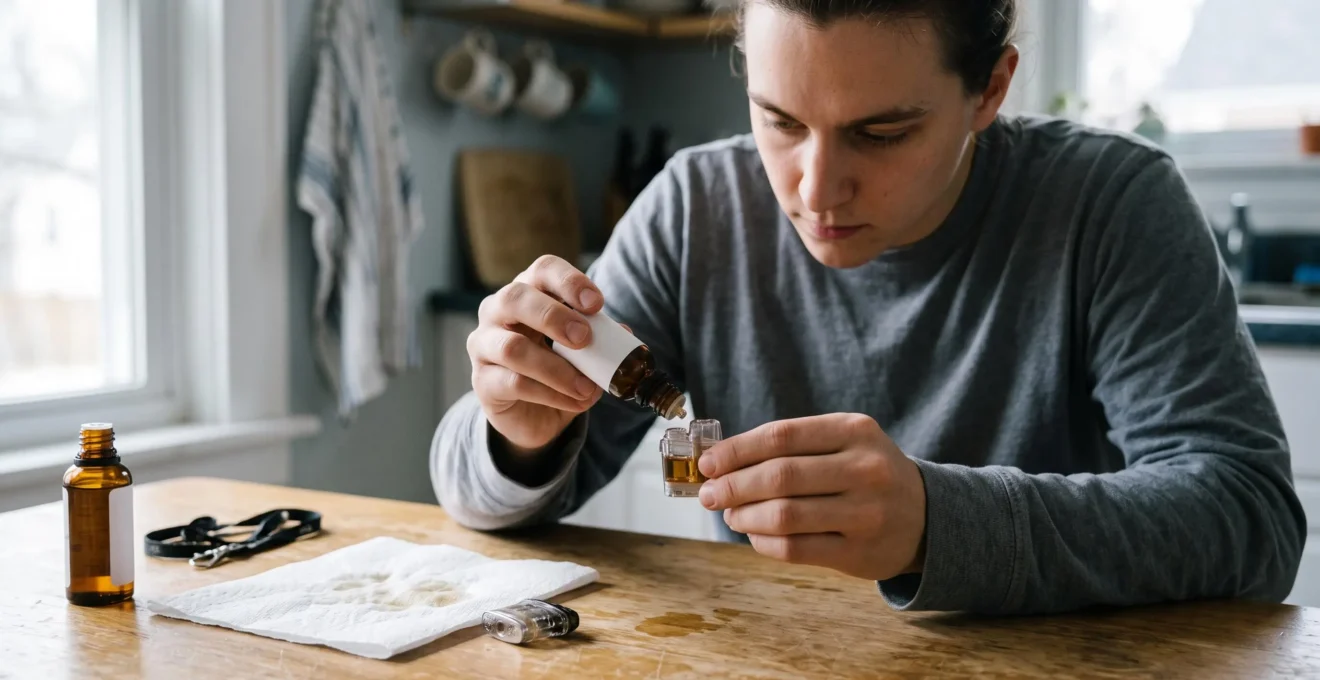
Refillable vape pods can remain functional through multiple e-liquid refills, but their reliability depends on more than the number of times the reservoir is filled. Liquid viscosity, filling technique, seal condition and coil maintenance all influence whether a pod delivers consistent flavour or develops leaks, gurgling and burnt-tasting vapour.
For adult UK pod users, the practical objective is to reuse compatible hardware without repeatedly replacing components that still work. That requires understanding which problems are caused by handling, which originate in the e-liquid and which indicate genuine coil deterioration.
A reliable routine starts with choosing an appropriate liquid, filling without contaminating the airflow channel and checking the pod before reinstalling it. Cleaning can address certain residues, but it cannot reverse heat-damaged wicking material. Knowing that distinction prevents unnecessary maintenance and helps identify when replacement is justified.
The following guidance applies to reusable vaping hardware and should be used alongside the instructions for the specific device. Pod designs, filling ports and replaceable components differ, so no single procedure is suitable for every model.
Refillable pod reliability at a glance
- Prevent avoidable leaks by respecting the filling limit, keeping liquid away from airflow channels and checking that seals close correctly.
- Match e-liquid viscosity to the manufacturer’s coil and wicking specifications rather than choosing a PG/VG ratio based on flavour preferences alone.
- Clean accessible components when appropriate, but replace burnt coils, damaged seals or integrated pods that no longer operate reliably.
- Why Do Refillable Pods Offer More Flexibility Than Prefilled Cartridges?
- How Do You Refill a Vape Pod Without Causing Leaks or Gurgling?
- Refillable or Prefilled Pods: Which Fits a Low-Maintenance Routine Better?
- Which Refill Habits Cause Flavour Carryover or Shorten Pod Life?
- When Should a Refillable Pod Be Cleaned, Refilled or Replaced?
- Compact Pod or Vape Pen: Which Is Better for Commuting and Daily Carry?
- How Do You Match a PG/VG Ratio to Your Coil and Device Type?
- How Does an Atomizer Head Affect Everyday Vape Performance?
Why Do Refillable Pods Offer More Flexibility Than Prefilled Cartridges?
Refillable pods offer greater flexibility because users can select compatible bottled e-liquids, choose nicotine strengths and manage how much liquid they add at each refill. Unlike prefilled cartridges, they also allow users to adjust liquid composition to suit their coil and wicking system. That freedom is useful, but it introduces additional maintenance responsibilities.
Three forms of flexibility matter in everyday use: flavour selection, purchasing options and technical compatibility. Although they are often grouped together, each affects the experience differently.
- Flavour flexibility: a refillable reservoir can accept different compatible e-liquids without changing the entire device. Strong flavours may nevertheless remain in the wick after switching.
- Economic flexibility: bottled liquid allows users to compare refill costs rather than purchasing a new prefilled cartridge whenever the liquid runs out. Actual savings depend on bottle prices, refill losses and component replacement frequency.
- Technical flexibility: users can select an appropriate PG/VG formulation for the coil, wicking ports and device design, subject to the manufacturer’s specifications.
Technical flexibility has the most direct bearing on reliability. A liquid that flows too slowly through the wick can leave the heating element insufficiently supplied. A formulation that flows too readily for the device’s liquid-control system may contribute to flooding or seepage.
Prefilled cartridges generally arrive with a liquid selected for their hardware. Refillable systems transfer more of that compatibility decision to the user, along with responsibility for filling and resealing the reservoir.
In the UK, this distinction has a regulatory dimension. The UK government guidance on reusable vape requirements explains that reusable products can receive more liquid either from a bottle or through replacement prefilled cartridges. The ban on supplying single-use vapes took effect on 1 June 2025. Devices covered by the rules must also meet applicable user-replaceable coil requirements.
Importantly, a reusable device is not necessarily one whose existing cartridge can be manually refilled. A replacement prefilled cartridge may form part of a legally reusable system.
A refillable pod can remain useful through repeated refills when its coil, seals and reservoir remain in suitable condition. There is no universal refill count that guarantees its lifespan: a damaged gasket or burnt wick can require replacement much sooner.
For users choosing manual refilling, the next priority is making the filling process consistent enough that ordinary handling does not introduce liquid into places it should never reach.
How Do You Refill a Vape Pod Without Causing Leaks or Gurgling?
To refill a vape pod without avoidable leaks, let it cool, open the designated filling port and add compatible e-liquid without exceeding the manufacturer’s fill limit. Keep liquid out of the central airflow channel, close the stopper securely and check the pod for moisture before reinstalling it. Follow the specified priming instructions whenever a new coil is fitted.
The filling port, airflow opening and electrical contacts serve different purposes. Confusing them is a common practical error: liquid introduced into the airflow path may cause gurgling or reach the base of the pod instead of staying in the reservoir.
The correct filling method depends on the model. Some pods use a side-mounted silicone stopper; others have top-fill mechanisms or removable reservoir sections.
Aspire‘s Cyber S pod refill instructions, for example, specify removing the pod, opening its silicone filling seal and adding e-liquid. Aspire recommends waiting five minutes after filling that model before use to allow the coil to saturate. This is a product-specific instruction, not a universal five-minute rule.
Fresh coils often require more careful priming than coils that are already saturated. Follow the device instructions instead of assuming that a brief wait is always sufficient.
Temperature also matters. Recently used heating components can remain warm, temporarily increasing liquid flow. Allowing the pod or atomizer to cool before opening it reduces one avoidable handling variable.
If gurgling begins, liquid may have entered the airflow passage or accumulated around the heating assembly. Stop using the device, detach the pod and inspect the base and accessible airflow openings. Wipe external moisture with a clean, dry tissue and ensure the electrical contacts are dry.
Do not blow forcefully through the pod or fire the device repeatedly to clear excess liquid. Either action may worsen flooding or expose the heating element to unsuitable conditions. If the manufacturer permits gentle unpowered draws as part of its troubleshooting procedure, follow that guidance; otherwise, use the approved clearing method.
Five checks for a cleaner, more consistent refill
- Check the temperature: confirm the pod has cooled before opening it. The practical result is a reservoir ready to handle without residual heating.
- Inspect the filling port: locate the correct opening and examine the stopper for visible damage. The result is a clear filling route and an identifiable sealing surface.
- Control the liquid level: add compatible e-liquid without exceeding the specified fill limit. The visible result is an appropriate liquid level with no liquid deliberately introduced into the airflow chimney.
- Close and wipe: fully seat the stopper, then inspect and wipe the pod’s exterior and contacts. The result is a sealed, externally dry pod.
- Confirm readiness: follow the manufacturer’s priming or waiting instructions, particularly for a new coil. The result is a completed refill with no visible leakage before use.
If liquid continues escaping after these checks, inspect the gasket, pod body and coil seating rather than adding more liquid or repeatedly restarting the device.
Repeated leaks should not be treated as normal maintenance. Persistent liquid escaping from the reservoir warrants further inspection or replacement before the pod is used again.
Refillable or Prefilled Pods: Which Fits a Low-Maintenance Routine Better?
Prefilled pods generally suit users who want minimal hands-on liquid handling, while refillable pods suit those willing to perform short maintenance tasks in exchange for greater choice. Neither format eliminates the need to inspect the device. The better option depends on how often the user changes liquids, tolerates refilling and replaces worn components.
Low maintenance should be measured by the complete ownership routine, not just the time needed to replace a cartridge. Prefilled systems reduce contact with bottled e-liquid, whereas refillable systems can reduce reliance on proprietary cartridge stock.
The practical differences become clearer when compared across common daily situations.
| Decision factor | Refillable pod | Prefilled pod |
|---|---|---|
| Liquid handling | Manual filling and resealing required | Cartridge replacement instead of bottle filling |
| Flavour selection | Broad choice within device compatibility limits | Limited to compatible stocked cartridges |
| PG/VG control | Allows selection of compatible bottled formulations | Usually predetermined by the cartridge supplier |
| Cleaning | Reservoir, contacts and accessible components may need attention | Device contacts and cartridge connections still require inspection |
| Running costs | Bottled-liquid costs plus coil or pod replacements | Recurring cartridge purchases |
| Availability | Depends on compatible liquids and replacement parts | Depends on availability of the exact cartridge format |
For someone consistently using one available flavour and prioritising minimal liquid handling, a compatible prefilled system may be simpler. Someone who regularly changes flavours or needs to select a specific compatible PG/VG composition may benefit more from a refillable reservoir.
However, prefilled does not mean failure-proof. Cartridges can develop leakage, contact problems or inadequate liquid delivery. Storage conditions, product defects and device compatibility still matter.
Waste comparisons also require care. A refillable pod can reduce the frequency of cartridge disposal, but coils and reservoirs may still need replacement. The environmental result depends on actual usage, component durability and appropriate waste handling rather than refillability alone.
In the UK, batteries and electrical vaping components should be handled through appropriate electrical or battery recycling arrangements rather than treated as ordinary household waste where separate collection is required.
Cost comparisons should likewise account for all consumables. A refillable setup that repeatedly damages coils may not provide the anticipated savings over a dependable prefilled system.
Once a refillable format has been chosen, the largest avoidable performance differences often arise from routine liquid changes and the condition of the wick.
Which Refill Habits Cause Flavour Carryover or Shorten Pod Life?
Flavour carryover occurs when residues from a previous e-liquid remain in the wick, coil or reservoir after refilling. Strongly flavoured liquids can be particularly noticeable when followed by a milder one. Other habits that can shorten coil life include allowing the wick to run dry, taking repeated draws without adequate resaturation and using incompatible liquid formulations.
The wick is not simply a passage through which liquid moves. Its absorbent material retains some of the previous formulation. Emptying the reservoir does not necessarily remove that liquid, so a new flavour may initially taste like a mixture of both.
Menthol, citrus and rich dessert-style flavour profiles can create noticeable carryover, although the actual persistence depends on the formulation, wick material and amount of liquid remaining.
A useful distinction is whether the next liquid is similar or contrasting. Topping up a mild fruit flavour with a closely related one may produce an acceptable blend for some users, provided both liquids are compatible. Switching from a strongly flavoured dessert liquid to a subtle formulation is more likely to reveal lingering residues.
Mixing two liquids in a nearly empty reservoir is not the same as starting with a clean pod. The remaining liquid can alter flavour even when the coil remains functional. That change alone does not establish a hardware defect.
Four habits deserve particular attention:
- Running the reservoir too low: insufficient liquid can leave the wick unable to replenish what is vaporised, potentially damaging the absorbent material.
- Taking repeated draws too quickly: the wick may not recover between heating cycles, particularly when using viscous liquid in a small wicking system.
- Using poorly matched liquid: an unsuitable viscosity can interfere with consistent liquid delivery.
- Ignoring accumulating residue: deposits around the heating assembly may progressively affect flavour and vapour production.
Sweetened formulations can leave deposits on heating components, but the rate of deterioration varies with composition and hardware. A dark liquid is not automatically incompatible, nor does every high-VG formulation damage a coil.
When changing between strongly contrasting flavours, a separate compatible pod can be more practical than attempting to eliminate every trace from an already saturated wick. Where cleaning is supported, rinse only the components the manufacturer identifies as washable.
Do not rinse a complete integrated-coil pod simply because its previous flavour is persistent. Water trapped inside the coil assembly or electrical connection can create additional problems, and the manufacturer may not permit that cleaning method.
When flavour changes persist despite suitable liquid and careful handling, maintenance decisions should be based on the symptoms and the pod’s construction rather than the number of refills alone.
When Should a Refillable Pod Be Cleaned, Refilled or Replaced?
Refill a pod when its liquid approaches the manufacturer’s recommended minimum level, clean it when removable components have accessible residue and replace worn parts when cleaning cannot restore correct operation. Persistent leaks, burnt flavour, damaged seals or visibly deteriorated wicking are stronger replacement signals than an arbitrary refill count. Always distinguish removable-coil systems from integrated-coil pods.
Cleaning and replacement solve different problems. A reusable reservoir may retain deposits that can be removed safely, while a coil whose cotton has been scorched cannot be restored by washing.
Visible residue alone does not always justify replacing an entire pod. The first step is identifying which component is affected and whether it is designed to be serviced.
A practical inspection starts with four observations: the flavour, the amount of vapour, the presence of liquid around the base and the condition of the stopper or gasket. Each observation helps narrow the diagnosis without immediately discarding the pod.
| Observed condition | First action | When replacement is appropriate |
|---|---|---|
| Liquid approaching the minimum level | Refill according to device instructions | Not normally required if operation remains correct |
| Lingering previous flavour | Clean permitted components or use a dedicated pod | When flavour remains unacceptable and the wick cannot be serviced |
| Muted flavour or reduced vapour | Check charge, contacts, liquid level and coil condition | When a worn coil is identified or the pod fails to recover |
| Liquid escaping around the base | Inspect filling level, stopper, seal and coil seating | When leakage persists or seals are damaged |
| Persistent burnt taste | Stop use and inspect the coil and liquid supply | When the wick is heat-damaged or burnt flavour persists after correct priming |
Where a device has a removable coil, the reservoir may be washable after the electrical and heating components have been separated in accordance with the manual. If warm-water rinsing is permitted, the reservoir must dry thoroughly before reassembly.
Some integrated-coil pods are not designed for internal washing. Attempting to rinse the entire assembly can leave moisture in the wicking material or connections. In that situation, replacing the pod may be the appropriate maintenance action.
When several problems occur together, such as weak flavour, repeated leakage and visible wick deterioration, replacement becomes a stronger consideration. Two simultaneous symptoms are a useful prompt for inspection, not a universal technical threshold.
Storage also changes the decision. E-liquid left in an unused pod can undergo flavour changes or contribute to residue over time, depending on its composition and storage conditions. Follow manufacturer guidance for extended breaks, including whether the reservoir should be emptied. Do not attempt to empty or clean sealed components in ways the manufacturer does not support.
For users who carry a device throughout the day, avoiding preventable leakage also means considering how the pod behaves in pockets, bags and changing temperatures.
Compact Pod or Vape Pen: Which Is Better for Commuting and Daily Carry?
Compact pods are generally convenient for commuting because they occupy less pocket space, while larger vape pens may offer greater liquid capacity and fewer refilling occasions. Neither format is automatically more leak-resistant. Portability depends on reservoir construction, filling-port security, temperature exposure and how securely the device can be stored during movement.
A compact device is easier to carry discreetly, but limited reservoir capacity can mean opening the filling port more frequently. Each refill creates another opportunity to introduce liquid into the wrong opening, misalign a stopper or handle a worn seal.
A larger vape pen may need refilling less often, depending on its tank and consumption pattern. Its size can nevertheless make upright storage less convenient, particularly in a crowded bag.
Device format alone does not determine filling method. Some compact pods must be detached before refilling, while others allow access to the filling port without removing the reservoir. Vape pens likewise differ in whether their tanks or pods can be separated from the battery housing.
The most useful commuting criteria are therefore practical rather than cosmetic:
- Filling-port protection: check whether the stopper is exposed to pressure from nearby objects.
- Reservoir inspection: a visible liquid level helps identify when a refill is needed before the wick runs dry.
- Carrying position: keeping the device upright where practical may reduce opportunities for liquid to migrate toward airflow openings.
- Heat exposure: avoid leaving vaping devices in hot parked vehicles or direct sunlight.
- Cleaning access: removable pods can make inspection and drying of external contacts easier.
Travel creates additional pressure-related considerations. Changes in cabin pressure during flights may contribute to leakage from liquid-filled reservoirs. Airline rules concerning the carriage of vaping devices, batteries and e-liquids must also be checked before travelling. Vaping or charging the device on an aircraft is not permitted.
For journeys involving pressure changes, follow the device manufacturer’s storage guidance rather than assuming that partial filling will prevent leakage. Keep the device protected from accidental activation and use a suitable containment method if leakage is possible.
Commuters should also consider how easily they can replace damaged pods or coils rather than relying solely on liquid capacity. A format with compatible, readily available replacement components can be more practical over time.
Regardless of device size, liquid compatibility remains a central reliability factor: a well-protected reservoir cannot compensate for a formulation the coil struggles to absorb.
How Do You Match a PG/VG Ratio to Your Coil and Device Type?
Match e-liquid to the manufacturer’s coil and wicking specifications, using the PG/VG ratio as an indication of how readily the liquid will flow. Higher-PG formulations are generally thinner, whereas higher-VG formulations are more viscous. Small wicking ports often favour thinner liquids, while hardware designed for greater liquid flow may accommodate thicker blends.
Propylene glycol (PG) and vegetable glycerine (VG) form the main liquid base in many e-liquids. Their different physical properties influence how liquid travels from the reservoir into the wick.
PG is relatively fluid and is commonly used in formulations intended for smaller wicking systems. VG is thicker and contributes to vapour production, but its slower flow can create delivery problems when the wick and coil assembly are not designed for it.
Innokin‘s e-liquid composition guidance explains this viscosity difference and identifies wicking-port design as an important compatibility consideration. The manufacturer describes formulations containing 70 % VG or more as high-VG liquids, but that classification does not establish a universal compatibility threshold.
Coil resistance provides additional context, although it cannot determine suitability by itself. Higher-resistance coils are often found in compact devices with modest liquid-flow requirements. Lower-resistance coils designed for greater vapour production may have larger wicking openings.
| Hardware characteristic | Liquid characteristic to consider | Potential mismatch |
|---|---|---|
| Small wicking openings | Relatively fluid, manufacturer-approved formulation | Very thick liquid may replenish the wick too slowly |
| Larger wicking channels | Formulation within the stated supported viscosity range | Excessively thin liquid may contribute to oversupply or flooding in susceptible designs |
| Integrated-coil pod | Liquid explicitly compatible with the complete pod assembly | Persistent mismatch may require replacing the whole pod |
| Replaceable coil system | Liquid matched to the installed coil model | Changing coils can alter the appropriate liquid choice |
High VG does not automatically cause leaks. When a thick formulation cannot reach a small wick quickly enough, dry hits are generally the more direct concern. Flooding or gurgling is more plausibly associated with excess liquid entering the coil or airflow system, including situations involving an overly fluid formulation, damaged seals or incorrect filling.
If a liquid lies near the edge of the device’s recommended compatibility range, strict adherence to priming instructions and avoiding repeated rapid heating may help prevent the wick from drying out. These handling adjustments cannot make an incompatible formulation suitable.
Do not attempt to correct an unsuitable liquid by exceeding recommended settings, modifying the coil or altering the formulation without manufacturer guidance.
Even with a suitable liquid, the heating assembly gradually changes during use. Recognising the difference between normal ageing and a correctable filling issue is the final part of maintaining consistent performance.
Key takeaways before inspecting the atomizer
- Diagnose the cause of a symptom before replacing hardware: flooding, restricted liquid delivery and heat-damaged wicking require different responses.
- Assess the complete system rather than coil resistance alone, including wicking-port dimensions, seal condition and the manufacturer’s compatible liquid range.
- Replace only the component designed to be replaced, unless an integrated pod or damaged reservoir makes a complete cartridge change necessary.
How Does an Atomizer Head Affect Everyday Vape Performance?
The atomizer head controls how e-liquid reaches the heating element and becomes vapour. Its wick, coil and electrical connection therefore influence flavour, vapour output and the appearance of problems such as dry hits or gurgling. As deposits accumulate or the wick deteriorates, performance can change even when the reservoir and seals remain in good condition.
The atomizer is where several maintenance variables interact. A compatible liquid must reach the wick at an adequate rate, the heating element must operate within its intended conditions and the assembly must remain correctly fitted.
A symptom observed at the atomizer does not necessarily originate there. For example, liquid entering an airflow opening during refilling can produce gurgling around an otherwise functional coil. Conversely, insufficient liquid delivery can cause an unpleasant dry taste even when the tank itself is intact.
Coil wear tends to become noticeable through a combination of changes. These may include weaker flavour, reduced vapour production under otherwise comparable conditions, persistent unpleasant notes or visible deposits on accessible coil components.
A metallic taste is not a reliable standalone indicator of ordinary coil ageing. If an unusual metallic, chemical or burnt taste appears, stop using the device and inspect it rather than assuming continued use is harmless.
A useful diagnostic sequence begins by checking the simplest variables:
- Confirm the reservoir contains sufficient compatible e-liquid and that the device has adequate battery charge.
- Inspect the accessible contacts and pod connection for external moisture or contamination.
- Check the filling stopper, gasket and coil installation according to the manufacturer’s instructions.
- Assess whether the coil has been primed correctly and whether its wick shows visible deterioration.
- Replace the appropriate component if the fault persists or physical damage is identified.
Innokin’s troubleshooting instructions identify overfilling, sealing problems, incorrect coil installation, inadequate priming and unsuitable operating conditions as possible explanations for leakage or burnt flavour. They also recommend keeping electrical connections clean and dry.
In a replaceable-head system, a worn coil can be exchanged while retaining a sound reservoir. In an integrated-coil pod, the coil and cartridge are replaced together because the heating assembly is not intended to be serviced separately.
This difference matters economically. A pod body that remains structurally sound may provide continued service after a coil replacement, while attempting to recover burnt cotton inside an integrated pod generally wastes effort and may create additional problems.
There is no dependable universal schedule for replacing an atomizer head. Liquid composition, compatible operating settings, usage patterns and coil design all affect performance. The most practical approach is to observe changes and follow the manufacturer’s replacement recommendations.
For the next refill, inspect the seal, confirm liquid compatibility, fill to the correct level and follow the device’s priming guidance. If leaks, burnt flavour or physical damage persist, stop using the affected pod and replace the faulty component rather than repeatedly attempting to force it back into service.
How many times can a refillable vape pod be refilled?
There is no universal refill limit. The usable lifespan depends on the pod’s construction, coil condition, seal integrity, liquid compatibility and handling. Replace the relevant component when performance or physical condition indicates deterioration, following the manufacturer’s guidance rather than an arbitrary refill count.
Is a small amount of condensation beneath a vape pod always a leak?
No. Small amounts of condensation can collect around accessible connections during normal operation. However, recurring wetness, visible liquid escaping from the reservoir or liquid entering electrical contacts warrants inspection. Keep the connections clean and dry, and stop using a device with persistent leakage.
Can a burnt vape coil recover after adding more e-liquid?
Adding liquid can correct an insufficient supply before damage occurs, but it does not reverse cotton that has already been scorched. If a burnt taste persists despite sufficient compatible liquid and correct priming, stop using the affected coil and replace it, or replace the integrated pod where appropriate.
Should an unused refillable pod be stored full or empty?
Follow the manufacturer’s storage instructions for the specific pod. For an extended period without use, some designs may benefit from having their reservoir emptied through an approved procedure. Do not force open sealed cartridges or wash integrated heating components. Store vaping products securely, away from heat and out of children’s reach.
What should be done if e-liquid spills during refilling?
Stop refilling, keep liquid away from electrical parts and wipe the affected exterior surfaces according to the device instructions. Avoid skin contact with nicotine-containing liquid and wash exposed skin promptly with soap and water. If liquid has entered the battery housing, do not charge or use the device until it has been assessed according to the manufacturer’s safety guidance. Keep spilled e-liquid away from children and pets.