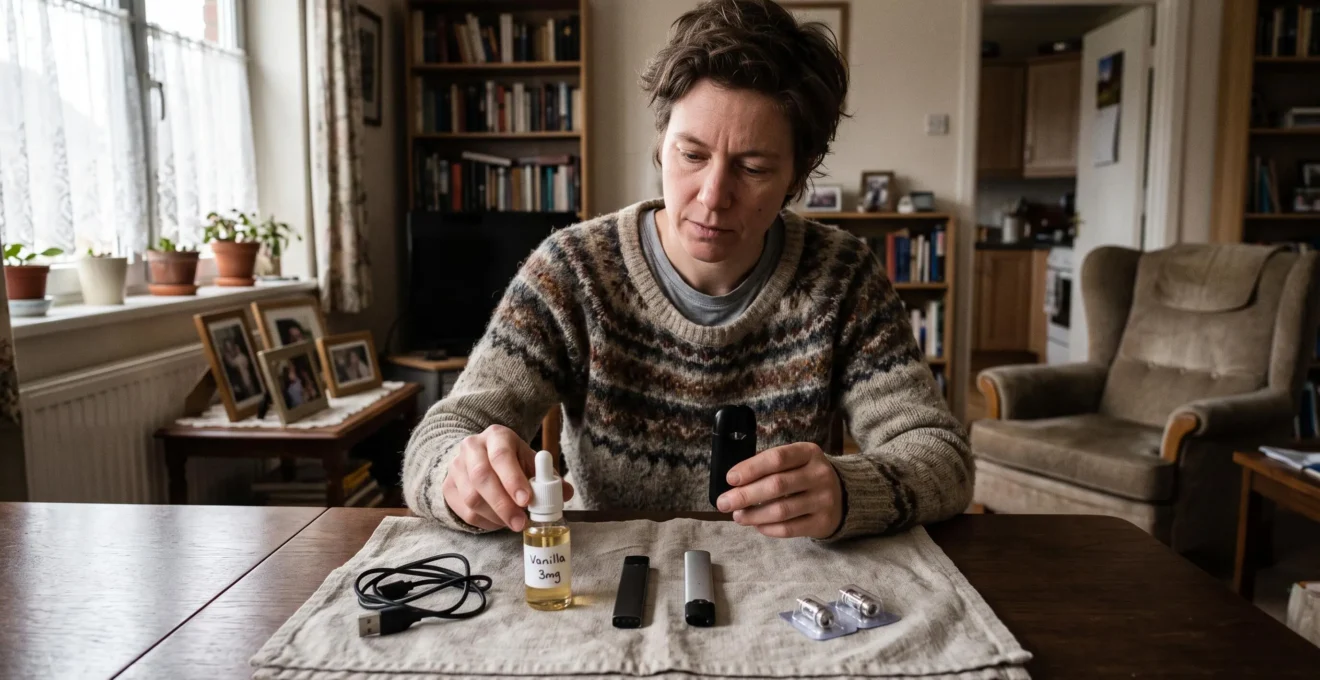
A basic vaping setup does not need a collection of accessories, adjustable settings or specialist equipment. For an adult smoker considering switching from cigarettes, the essentials are a compatible device, a heating coil, a container for e-liquid and a suitable means of charging the battery. Depending on the product, several of these components may already be integrated.
The more important decisions concern how the device feels to use, whether its nicotine delivery helps manage cigarette cravings and how much maintenance its owner is willing to undertake. A compact pod system may be sufficient for someone who wants minimal handling, while a refillable vape pen may suit someone comfortable with replacing coils and adding e-liquid.
Vaping is not risk-free, and the long-term health effects remain uncertain. It is relevant here as a potential alternative for adults who already smoke, not as a recommendation for non-smokers to start using nicotine.
Basic vaping setup: the essentials
- A straightforward setup combines a rechargeable power source, a compatible coil and reservoir or pod, suitable e-liquid and approved charging equipment.
- Choose between a pod and a vape pen according to maintenance preferences, draw style and nicotine needs rather than the number of features.
- Follow the device instructions for filling, coil preparation and charging. Replace faulty consumable parts before assuming the whole device needs replacing.
- Why Does a Beginner Vape Setup Need Fewer Components Than Many People Expect?
- How Do You Prepare a Basic Vape Setup Before the First Use?
- Pod System or Vape Pen: Which Is Simpler for a First-Time Adult User?
- Which Beginner Setup Mistakes Cause Leaks, Burnt Coils or Charging Problems?
- When Should a Beginner Change Part of Their Vape Setup?
- Vape Pen or Pod System: Which Suits an Adult Smoker Wanting Minimal Maintenance?
- How Do You Start a Pod System Without Causing Leaks or a Burnt First Puff?
- Is Vaping a Suitable Smoking Alternative for Adults Who Struggle to Quit?
Why Does a Beginner Vape Setup Need Fewer Components Than Many People Expect?
A beginner vaping setup needs relatively few components because modern devices combine functions that previously required separate parts. A rechargeable battery powers a heating coil, which vaporises e-liquid held in a tank or pod. Beyond compatible liquid and charging equipment, additional accessories are generally optional rather than essential for straightforward daily use.
In a basic refillable device, the main elements are a battery, a coil with an absorbent wick, a reservoir and a charging connection. Some devices use replaceable coils, while others have integrated coils that require replacing the entire pod when they wear out.
Closed-pod systems simplify this further. Their pre-filled cartridges contain the liquid and heating components, so the user does not need to fill a reservoir or handle a separate coil. However, the battery remains a component that needs appropriate charging and care.
According to NHS guidance on vaping to quit smoking, available device categories include vape pens, pod systems and more customisable mods. The NHS also emphasises choosing an appropriate nicotine strength to help manage cravings.
For someone moving away from cigarettes, an extensive adjustment menu is not automatically useful. A device with preset power and a comfortable mouth-to-lung draw may offer everything required. Mouth-to-lung, often abbreviated MTL, describes drawing vapour into the mouth before inhaling, broadly resembling the inhalation pattern familiar to many cigarette smokers.
Every optional setting introduces another decision. Adjustable wattage requires understanding the coil’s recommended operating range, while interchangeable tanks demand compatibility checks. These features can be useful for experienced users but are not prerequisites for an initial setup.
Unnecessary purchases can also increase expenditure. Buying several tanks, spare accessories or incompatible liquids before establishing personal preferences may leave equipment unused. Although a simpler device does not guarantee lower total costs, starting with fewer compatible components makes spending easier to evaluate.
The goal is not to purchase the least capable device available. It is to choose one that provides an acceptable draw, suitable nicotine delivery and manageable daily maintenance without adding functions that solve no immediate problem.
How Do You Prepare a Basic Vape Setup Before the First Use?
Prepare a basic vape setup by checking its instructions, inspecting the components, charging the battery appropriately and ensuring that the coil’s wick is adequately saturated before activation. Use the manufacturer’s recommended settings and begin with gentle puffs. The preparation process differs between refillable tanks, refillable pods and pre-filled cartridges.
Before handling e-liquid, confirm that the tank or pod is compatible with the device. Check that the coil is correctly fitted, any protective packaging has been removed and the reservoir shows no visible damage.
Charging requirements depend on the battery. Use the manufacturer-specified charging equipment rather than assuming that every USB power supply is suitable. A full initial charge is useful when the manufacturer recommends it, but it is not a universal technical requirement.
For a refillable tank, fill through the designated opening without introducing liquid into the central airflow channel. If the device uses a replaceable coil, follow its specific priming instructions. A dry wick exposed to heat can develop an unpleasant burnt taste and may become permanently damaged.
Manufacturer instructions differ. For example, Innokin specifies a minimum five-minute waiting period for its Z Force tank after priming, but that figure should not be applied automatically to unrelated pod systems.
E-liquid compatibility matters as well. Propylene glycol (PG) and vegetable glycerine (VG) affect the liquid’s characteristics. The appropriate mixture depends on the device and its wick design. A high-VG liquid may not suit a low-power coil with small liquid-feed openings, while other tanks are designed specifically for thicker liquids.
Bristol City Council‘s vaping guidance explains how PG/VG composition influences flavour, throat sensation and vapour production. It also advises first-time users to become familiar with charging, filling and cleaning their equipment.
Five checks before the first puff
- Identify the device. Record its model and confirm that the manufacturer’s instructions are available.
- Check component compatibility. Verify that the installed pod or coil and chosen e-liquid are suitable for the device.
- Inspect the battery and charger. Confirm that neither is damaged and that the charging equipment meets the manufacturer’s requirements.
- Prepare the liquid system. Confirm that a refillable reservoir is correctly filled and the wick has received the prescribed preparation time, or that a pre-filled cartridge is correctly installed.
- Check initial operation. Start with the recommended settings and a gentle puff, then note any unusual taste, leakage or warning indicator.
A normal first puff should not produce a persistent burnt taste. If it does, stop using the device and check the instructions, liquid level and wick preparation. Increasing the power is not an appropriate remedy for a potentially dry coil.
Once the equipment is operating normally, consistent use matters more than frequent adjustments. Establishing a repeatable filling, charging and inspection routine reduces uncertainty without requiring technical expertise.
Pod System or Vape Pen: Which Is Simpler for a First-Time Adult User?
A pod system is often simpler for a first-time adult user because its cartridge and coil may be integrated, reducing the number of parts that require handling. A refillable vape pen can offer greater flexibility but may involve more maintenance. Neither format is universally preferable: draw style, nicotine compatibility and refill preferences determine which feels more straightforward.
A useful comparison begins with three questions: how cigarette-like should the draw feel, what nicotine formulation is compatible with the device and how much routine handling is acceptable?
Some pod systems are designed for a relatively tight MTL draw. Vape pens vary more widely, so the term alone does not establish whether a particular model offers a tight or airy inhalation.
Nicotine salts and freebase nicotine are available in different products, but neither formulation is exclusive to pods or pens. The correct choice depends on the device’s specifications, the user’s needs and the applicable legal limits.
The practical differences become clearer when looking beyond the purchase price.
| Criterion | Pod system | Refillable vape pen |
|---|---|---|
| Routine handling | Usually cartridge replacement or pod refilling | Usually tank refilling and periodic coil replacement |
| Coil replacement | Integrated in some pods; separately replaceable in others | Often independently replaceable |
| Draw style | Frequently designed for compact MTL use | Varies by model and coil |
| Liquid choice | Restricted in closed systems; broader in refillable pods | Broader, within manufacturer compatibility requirements |
| Ongoing costs | May include complete replacement cartridges | Often includes separate coils and bottled liquid |
| Battery capacity | Varies; compactness can limit capacity | Varies; some models offer larger batteries |
Consider a hypothetical adult who smokes relatively few cigarettes and spends little time away from charging facilities. A compact pod may meet their practical needs without the added size of a larger device. Someone who requires more battery autonomy may reasonably prioritise capacity instead.
Long-term expenditure needs a similar assessment. A low purchase price does not establish low operating costs. Closed cartridges may require replacing the liquid container and coil together, whereas some refillable designs allow replacement of the coil alone.
To compare fairly, consider the price and expected consumption of compatible liquid, replacement cartridges or coils, and other manufacturer-approved consumables. Exact costs depend on the products selected and individual usage.
The initial choice need not be permanent. A simple first device can establish whether a particular draw and maintenance routine are acceptable, without committing to advanced hardware or unnecessary accessories.
Which Beginner Setup Mistakes Cause Leaks, Burnt Coils or Charging Problems?
Beginner vaping problems commonly arise from incorrect filling, inadequate wick saturation, incompatible components, poor maintenance or unsuitable charging practices. Leaks and burnt flavours do not necessarily mean the whole device is defective. Understanding where liquid, airflow and electrical charging can go wrong helps distinguish a replaceable-part problem from a genuine device fault.
A leaking reservoir may have a damaged seal, an incorrectly installed coil or an improperly closed filling port. Overfilling can also contribute to leakage, particularly when liquid enters an area intended for airflow.
Drawing unusually hard on a device intended for gentle mouth-to-lung inhalation can contribute to excess liquid entering the airflow path. However, repeated leakage should not automatically be blamed on inhalation technique: worn seals, incompatible parts and physical damage also require attention.
A burnt taste has a different mechanism. The coil heats a wick containing liquid. If the wick is insufficiently saturated, excessive heat can damage its material. Incompatible liquid, excessive power or frequent consecutive puffs without adequate resaturation may contribute.
Innokin’s technical guidance for the Z Force tank identifies insufficient liquid absorption, coil installation and seal condition among factors relevant to troubleshooting. These are useful examples of possible mechanisms, not universal diagnostic rules for every vaping device.
Charging problems deserve particular caution. Electrical Safety First‘s vape battery safety advice recommends following the manufacturer’s charging instructions and avoiding prolonged unattended charging.
A smartphone charger is not inherently unsuitable simply because it supports fast charging. Compatibility depends on the device and power supply specifications. The appropriate precaution is to use charging equipment approved or specified by the manufacturer, rather than guessing from connector shape alone.
Never charge a device that is visibly damaged, overheating or behaving abnormally. Stop using it and follow the manufacturer’s safety instructions. Do not attempt improvised battery repairs.
Storage can create additional problems. Excessive heat can affect the device and liquid, while impacts may damage the tank or battery. Keep vaping equipment and nicotine-containing liquids away from children and pets, following the product’s storage guidance.
If flavour deteriorates or vapour output decreases, inspect the liquid level, settings and consumable components before replacing the entire unit. Persistent leakage, visible electrical damage or overheating requires a more cautious response than routine coil maintenance.
The safest troubleshooting method is gradual and evidence-based: identify the symptom, check the relevant instructions and avoid continuing to operate equipment that may be damaged.
When Should a Beginner Change Part of Their Vape Setup?
Replace a vaping component when its condition or performance indicates a problem, rather than following an assumed universal replacement schedule. A coil may need changing when flavour consistently deteriorates or vapour production declines. Pods and tanks require attention when seals or structural components fail, while battery faults demand appropriate safety precautions.
Coil lifespan varies with use, liquid characteristics and device settings. A frequently used coil may deteriorate differently from one operated occasionally. Sweetened liquids, operating power and repeated heating cycles can influence performance, but there is no reliable replacement interval that applies to every product.
Practical signs worth investigating include:
- A persistent burnt or unpleasant taste despite an adequate liquid level.
- A noticeable reduction in vapour production when the device is otherwise operating normally.
- Unusual gurgling, flooding or leakage that remains after appropriate cleaning and reassembly.
- Visible deterioration or damage to a cartridge, reservoir or seal.
Darkening e-liquid can occur for several reasons and does not, by itself, prove that a coil needs replacement. Similarly, a brief change in flavour immediately after refilling is not enough to establish component failure.
The first diagnostic step is to check whether the wick is adequately supplied with compatible e-liquid. Confirm that the device is operating within its specified settings and that the reservoir has been assembled correctly.
If the coil is replaceable and its condition suggests wear, fit a compatible replacement according to the instructions. If normal performance returns, the old coil was a plausible cause. If the problem persists, investigate other components rather than repeatedly purchasing coils.
Some pods integrate the coil permanently. In those designs, replacing the cartridge is the intended maintenance action. Separate coil replacement is not possible unless specifically supported by the manufacturer.
A tank with cracked plastic, damaged seals or persistent leakage may need replacement. Replacing only the battery or main device is appropriate when the manufacturer’s diagnostics indicate a fault that cannot be remedied through approved maintenance.
Reduced battery runtime alone may reflect ageing, heavy usage or another issue. Swelling, abnormal heat, damaged connections or other electrical warning signs are more urgent reasons to stop using the device. Do not open or repair an integrated lithium-ion battery unless the manufacturer expressly provides a safe, approved procedure.
Replacing a component too early creates waste without necessarily resolving the original problem. A new coil that has not been prepared correctly can produce symptoms resembling those of an exhausted coil.
Good maintenance means replacing what is actually worn or damaged, keeping compatible equipment clean and recognising when a safety concern makes further use inappropriate.
Vape Pen or Pod System: Which Suits an Adult Smoker Wanting Minimal Maintenance?
An adult smoker seeking the least routine maintenance may prefer a closed-pod system because replacing a cartridge avoids liquid refilling and separate coil handling. A refillable pod or vape pen offers more flexibility but requires additional cleaning and consumable care. The most suitable option is the one whose everyday tasks remain manageable.
Maintenance includes more than replacing a coil. Batteries must be charged correctly, mouthpieces kept reasonably clean and devices inspected for damage or leaks.
Closed-pod systems generally reduce liquid handling. The user installs a compatible cartridge and replaces it when depleted or no longer functioning as intended. The trade-off is dependence on cartridges made for that particular system.
Refillable vape pens typically require checking the liquid level, opening and closing the filling port, and replacing coils when necessary. These tasks are not inherently difficult, but they create more opportunities for incorrect filling or assembly.
Refillable pod systems sit between these formats. Some use integrated coils and need only liquid refilling and cartridge replacement, while others allow coil changes.
For a realistic comparison, imagine two hypothetical adults. The first wants to avoid bottles, liquid spills and coil handling. A compatible closed-pod device would reduce those tasks. The second wants more choice of suitable e-liquid and accepts regular refilling. A simple refillable device may be more practical.
Neither profile proves that one format is medically more effective than another. What matters for an adult smoker attempting to switch is whether the device and nicotine delivery adequately support the transition away from cigarettes.
There is also a difference between flexibility and reliability. A closed system limits component combinations, which may simplify compatibility decisions. However, it restricts the available cartridge choices and can create supply dependence.
Open systems allow a wider selection of compatible products, but the user must check liquid formulation, coil specifications and replacement-part compatibility. Additional choice is only useful when someone wants to manage it.
Daily convenience should therefore be assessed in practical terms: whether refills are straightforward, charging is manageable and replacements can be obtained reliably. There is no universally established number of minutes that either format requires each week.
A device that fits existing habits is often easier to manage than one selected solely for its specifications. The relevant test is whether the user can maintain it correctly and consistently, not whether it has the most features.
How Do You Start a Pod System Without Causing Leaks or a Burnt First Puff?
Start a pod system by identifying whether its cartridge is pre-filled or refillable, checking compatibility and following the specific installation instructions. For refillable pods, allow the wick to absorb liquid for the period specified by the manufacturer before activating the coil. Gentle initial puffs and correct assembly help avoid preventable operating problems.
A pre-filled cartridge generally requires less preparation than an empty refillable pod. Remove any protective seals or transport tabs as directed, inspect the cartridge for leakage and insert it securely.
Do not assume that every pre-filled pod needs a fixed settling period after insertion. Cartridge designs and instructions vary. If a product specifies a waiting or activation procedure, follow it rather than applying a universal rule.
For refillable pods, identify the filling port and any maximum-fill marking. Open the designated seal, add the manufacturer-compatible e-liquid and close the port securely without forcing the mechanism.
Keep liquid out of the airflow channel where the design requires it. Wipe away accidental spills and inspect the pod before fitting it to the battery.
The wick must be adequately saturated before heating. A new cartridge with an integrated coil usually needs time after its first fill, but the correct period is product-specific. Drawing through the mouthpiece without power is not a universal priming method and should only be used if the manufacturer recommends it.
When ready, use the default or recommended power setting. For devices with adjustable output, remain within the coil’s specified operating range. Begin with gentle, short puffs rather than forceful inhalation.
A tight MTL pod is intended to provide resistance to airflow. Pulling harder does not necessarily improve vapour delivery and can contribute to flooding in some designs.
If a burnt taste appears immediately, stop operating the pod. Check the liquid level and the manufacturer’s priming instructions. If the wick was simply insufficiently saturated and has not been permanently damaged, allowing the prescribed preparation time may help. Persistent burnt taste can indicate irreversible coil damage requiring replacement of the coil or integrated pod.
Leakage should be approached separately. Inspect the fill seal, cartridge body and electrical contacts. Clean only as directed, and never immerse the battery section in liquid unless the manufacturer explicitly states that this is safe.
A few condensed droplets near the mouthpiece do not automatically indicate a defective cartridge. Repeated liquid accumulation, persistent leaks or liquid reaching electrical connections warrant investigation.
A correctly prepared pod should operate without persistent burning, visible leakage or abnormal electrical behaviour. If those conditions are not met, identify the cause before continuing rather than attempting to compensate through stronger inhalation or higher power.
Key takeaways before deciding whether to switch
- Device simplicity matters, but nicotine delivery and the ability to stop smoking cigarettes are more important than hardware features.
- A suitable setup should support a complete transition from smoking rather than encourage indefinite simultaneous use of cigarettes and vaping products.
- Adult smokers can discuss vaping, licensed nicotine replacement treatments and other cessation support with qualified healthcare professionals.
Is Vaping a Suitable Smoking Alternative for Adults Who Struggle to Quit?
Vaping can be a suitable alternative for some adults who smoke and have struggled to quit, particularly when it helps them replace combustible cigarettes completely. It is less harmful than smoking but is not harmless. The decision should consider nicotine dependence, previous quitting attempts, access to cessation support and the availability of other evidence-based treatments.
Cigarette smoking exposes people to toxic substances produced by tobacco combustion. Nicotine vaping avoids burning tobacco but still involves inhaling an aerosol that can contain potentially harmful substances. Its long-term effects are not fully understood.
The UK NHS recognises nicotine vaping as an option that can help adults stop smoking. It also recommends selecting a nicotine strength sufficient to manage cravings and withdrawal symptoms, with advice available from smoking cessation services.
The relevant comparison for an adult who already smokes is therefore not between vaping and breathing clean air. It is between continuing to smoke, attempting to stop using other methods and potentially switching completely to vaping.
Stopping smoking altogether remains the central health objective. Continuing to smoke cigarettes while vaping may limit the expected health benefit, particularly if cigarette consumption continues.
Nicotine dependence is a practical consideration. A device that delivers insufficient nicotine for a particular smoker may leave cravings inadequately controlled. Conversely, unnecessary nicotine exposure and unpleasant symptoms should not be ignored.
There is no universal nicotine strength that is appropriate for every adult smoker. Smoking patterns, product characteristics and individual responses differ. Specialist cessation advice can help avoid relying solely on trial and error.
Other options deserve consideration. Licensed nicotine replacement therapies, such as patches and gums, can be combined with behavioural support. Depending on medical suitability and local availability, prescription medicines may also form part of a cessation plan.
Recommendations for vaping vary internationally. The UK public-health approach should not be assumed to represent regulatory or clinical guidance in every English-speaking country. Adults outside the UK should consult relevant national health authorities and local healthcare professionals.
For someone who has previously tried quitting without success, the useful question is whether a different combination of support and treatment might work better. Vaping may be one option, but it is not a necessary step for everyone.
People who do not smoke should not start vaping. Pregnant people and anyone with relevant medical concerns should seek professional advice about appropriate cessation treatments rather than making assumptions about product safety.
Hardware should remain secondary to the health decision. A complicated device is not inherently a more effective smoking alternative, and a simple device is only useful if it supports the person’s actual cessation needs.
The practical next step for an adult smoker is to discuss their smoking pattern, previous quitting experiences and nicotine needs with an NHS stop smoking service or another qualified healthcare professional. That conversation can help establish whether vaping or another supported cessation method is the most appropriate route towards stopping smoking completely.
Do all vaping devices require a separate coil purchase?
No. Some refillable tanks use replaceable coils, while many pods integrate the coil into the cartridge. Closed-pod products may also arrive with a complete pre-filled cartridge. Check what is included and which components are replaceable before choosing a device.
Can the same e-liquid be used in every refillable device?
No. E-liquid compatibility depends on the coil, wick design, operating power and manufacturer’s specifications. PG/VG composition affects the liquid’s properties, and nicotine formulation and strength must also suit the device and intended user. Check the product instructions rather than assuming all bottled liquids are interchangeable.
Is it necessary to buy spare coils before using a first vape?
Not necessarily. First establish whether the device uses replaceable coils or integrated cartridges. Having an appropriate spare consumable can be convenient, but buying multiple unrelated parts before confirming compatibility is unnecessary.
What should happen to used vape batteries and disposable components?
Devices containing lithium-ion batteries should be handled through appropriate electrical waste or battery collection arrangements rather than placed in ordinary household rubbish. Follow local disposal rules and the manufacturer’s instructions. In the UK, retailers and designated recycling facilities can provide guidance on suitable collection routes.
Does choosing a simple vaping device guarantee that an adult smoker will quit cigarettes?
No. A straightforward device may reduce equipment-related inconvenience, but quitting success depends on several factors, including nicotine needs, personal circumstances and cessation support. Adults struggling to stop smoking can seek professional guidance on vaping and other evidence-based quitting options.