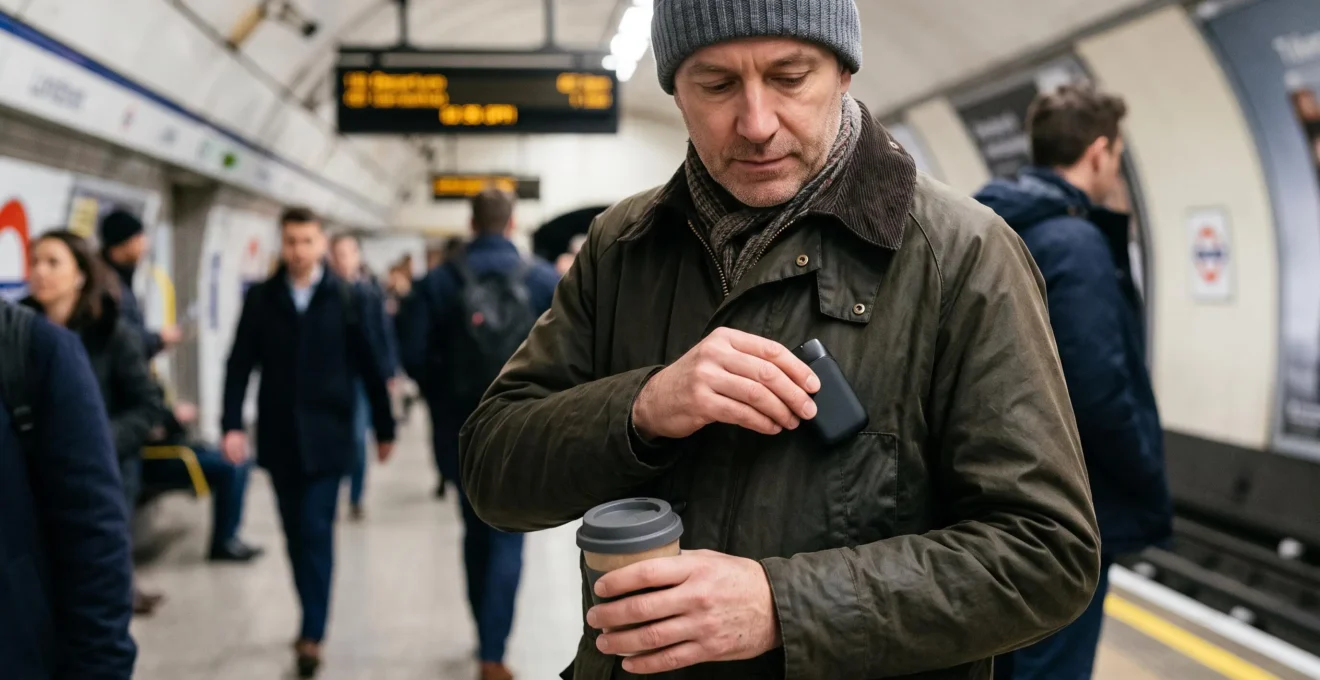
A compact pod system can simplify everyday vaping for adults who already use nicotine products, but pocket size alone does not make a device convenient. Battery endurance, cartridge reliability, filling access and resistance to accidental activation often matter more during a full day away from home.
The most practical choice depends on how frequently the device is used, whether the cartridges are prefilled or refillable, and how much maintenance the user is willing to perform. A lightweight pod that repeatedly leaks or needs charging during a commute may be less convenient than a slightly larger alternative.
For adult UK vapers, a useful assessment also considers replacement costs, manufacturer-specific cartridges and rules governing vaping in workplaces and public transport. This guide examines those trade-offs alongside the basic handling techniques that help prevent avoidable problems. Vaping is not risk-free, and nicotine can cause dependence; these considerations are particularly important for anyone who does not already smoke or vape.
Compact pod systems: the essentials
- Prioritise pocket-friendly dimensions, secure cartridges, reliable battery life and straightforward controls rather than size alone.
- Choose between prefilled convenience and refillable flexibility by comparing ongoing costs and maintenance tasks.
- Follow device-specific priming, filling and cleaning instructions to reduce leaks, burnt taste and unnecessary cartridge replacements.
- Why Compact Pod Systems Appeal to Adults Who Want Minimal Setup
- How to Start a Pod System Without Leaks or a Burnt First Puff
- Compact Pod or Vape Pen for Commuting and Daily Carry
- Which Pod System Problems Cause Leaks, Misfires or Weak Vapour
- When to Replace the Pod Instead of Cleaning It Again
- Vape Pen or Pod System for an Adult Smoker Wanting Minimal Maintenance
- How to Refill a Vape Pod Without Leaks or Gurgling
- How to Use Mouth-to-Lung Vaping Without Drawing Too Hard
Why Compact Pod Systems Appeal to Adults Who Want Minimal Setup
Compact pod systems appeal to adults who want fewer technical decisions because they combine the liquid reservoir and heating components into a simple cartridge-based arrangement. Many require no manual power adjustment or separate coil installation. Their convenience comes from reducing preparation and maintenance tasks, although battery capacity, cartridge compatibility and running costs still deserve attention.
With a prefilled system, the user generally replaces the cartridge when it is depleted, following the manufacturer’s instructions. A refillable system requires adding compatible e-liquid but can avoid replacing the entire cartridge after every refill. Neither arrangement is completely maintenance-free: contacts, seals and cartridge condition still need occasional inspection.
Two adult user profiles may value different aspects of this simplicity:
- Adults switching away from cigarettes: A familiar mouth-to-lung draw and straightforward operation may be preferable to adjustable power settings or large vapour output. Nicotine strength should be chosen carefully, within applicable limits and with appropriate cessation advice.
- Experienced adult vapers: A compact secondary device may be useful when carrying a larger setup is inconvenient. Compatibility, charging access and predictable operation can matter more than extensive customisation.
Compactness also introduces compromises. A smaller body leaves less physical room for a battery, while a proprietary cartridge connection may limit replacement choices. Prefilled cartridges can further restrict available liquid options. A refillable system introduces more routine work but may offer greater flexibility.
Before choosing, consider how often the device will be used, whether it must fit a trouser pocket, and how much recurring cartridge expenditure is acceptable. Compare the manufacturer’s stated battery capacity, charging specification and cartridge availability instead of assuming that all small pods behave alike.
A simple decision framework is to identify the main inconvenience the device must remove. If carrying bulk is the problem, size receives priority. If maintenance is the problem, cartridge replacement and filling procedures become more important.
A suitable everyday device is not necessarily the one with the fewest controls; it is the one whose remaining tasks fit comfortably into the user’s established routine.
How to Start a Pod System Without Leaks or a Burnt First Puff
Starting a refillable pod correctly means checking the cartridge, filling it through the designated opening, allowing a new wick to absorb liquid and confirming that the pod is properly seated before use. A dry heating element can produce an immediate burnt taste, while overfilling or an improperly closed port can cause leakage. Device-specific instructions take precedence.
For a new cartridge with an integrated coil, first confirm whether the manufacturer requires initial filling, a waiting period or removal of protective seals. Prefilled cartridges do not need manual filling, and some devices have different activation requirements.
The purpose of coil priming is to let e-liquid reach the absorbent material surrounding the heating element. Activating an inadequately saturated wick risks overheating it. According to Innokin‘s Zenith M technical support and maintenance instructions, a new Zenith M coil should be allowed at least five minutes to absorb liquid before vaping. That waiting time is specific to the documented atomizer, not a universal rule for every compact pod.
Where the manufacturer recommends unpowered draws as part of preparation, these should be gentle. Other designs may not require this step. Avoid using repeated activation attempts to compensate for a new cartridge that has not yet been prepared correctly.
On cartridges with an accessible filling reservoir and a separate central airflow tube, liquid belongs in the reservoir, not the tube. Directing the nozzle towards the designated filling area helps avoid flooding the airflow pathway. Some modern pods use a sealed filling port without an exposed central tube, so the actual cartridge design must guide the procedure.
Seals and pressure also matter. A loose filling stopper may allow liquid to escape, while a damaged cartridge can leak regardless of filling technique. A pod that has not fully engaged with the battery may fail to activate or produce inconsistent vapour.
Five checks before the first use
- Check protective seals: Remove only the transport seals identified in the manual. Verify that the cartridge and contacts are ready for use.
- Confirm the liquid level: For refillable pods, fill within the manufacturer’s markings. Verify that the reservoir is neither empty nor overfilled.
- Secure the cartridge: Close the filling port and seat the pod correctly. Verify that no gap or visible damage is present.
- Prepare the power and wick: Confirm adequate battery charge and complete the specified priming period. Verify that the device is ready without repeatedly firing a dry coil.
- Check the initial operation: If the instructions permit use, begin with a short, gentle draw. Verify that there is no leakage, persistent burnt taste or unusual heating.
Do not continue using a cartridge that repeatedly tastes burnt, leaks heavily or becomes unusually hot. Inspect it only after allowing the device to cool, and replace defective components according to the manufacturer’s guidance.
Correct preparation prevents several avoidable faults, but it cannot compensate for poor cartridge fit or damaged seals. Those problems become particularly noticeable when a device spends much of the day in a pocket or bag.
Compact Pod or Vape Pen for Commuting and Daily Carry
A compact pod is generally the more pocket-oriented format, while a vape pen may offer a longer body and, depending on the model, greater battery capacity. Neither design automatically wins for commuting. The practical choice depends on pocket dimensions, protection against accidental activation, charging needs, cartridge security and the restrictions applying at each destination.
A compact pod can fit more easily into a small compartment, but its exposed mouthpiece and cartridge may collect lint or experience pressure from other belongings. A pen-style device may occupy more vertical space yet be easier to locate in a bag. Actual dimensions and construction are more informative than the product category.
Battery endurance should be assessed against a realistic day rather than a manufacturer’s headline capacity alone. Power output, usage frequency, battery condition and ambient temperature can influence how often charging becomes necessary.
The following comparison describes common design tendencies rather than measured performance across all devices.
| Criterion | Compact pod system | Vape pen |
|---|---|---|
| Pocket storage | Often shorter and easier to fit into small spaces | Frequently longer, with a pen-like shape |
| Battery endurance | May require more frequent charging | Some models accommodate larger batteries |
| Liquid handling | Cartridge-based; prefilled or refillable | May use a refillable tank or cartridge |
| Maintenance | Often replaces an integrated cartridge or coil unit | May require separate coil maintenance |
| Accidental activation | Depends on draw sensor, button and lock features | Depends on button placement and lock features |
| Cartridge protection | Check retention and mouthpiece exposure | Check tank security and protective design |
Carry safety is as important as portability. Keep the device away from keys or objects that may damage it, and use any manufacturer-provided lock or power-off function before storage. Do not carry loose batteries with metal objects. An undamaged protective case can be useful where the manufacturer permits one.
Commuters should also separate portability from permission to vape. In the UK, smoking restrictions do not automatically apply to electronic cigarettes in the same way, but individual premises and transport operators may prohibit vaping. UK government guidance on smoking and vaping at work explains this legal distinction and the role of employer policies.
Rules vary across the UK’s nations and other English-speaking countries. A device’s small size does not provide an exemption from local restrictions or operator policies.
A useful field assessment is to imagine a typical day: morning travel, storage at work, permitted breaks and the journey home. Note where charging, carrying or accessing the device would become inconvenient. Comparing those specific friction points gives a more meaningful result than comparing size alone.
For everyday travel, reliable storage and predictable availability often matter more than achieving the smallest possible dimensions.
Which Pod System Problems Cause Leaks, Misfires or Weak Vapour
Pod systems can leak, misfire or produce weak vapour because of damaged cartridges, obstructed airflow, poor electrical contact, an exhausted coil or condensation inside the mouthpiece. The safest troubleshooting approach begins with identifying the symptom and inspecting accessible external parts. Persistent faults, abnormal heating or visible battery damage require stopping use rather than repeated activation attempts.
Not every drop of moisture around a pod indicates a failed seal. Vapour can condense within the mouthpiece and airflow passage, leaving small amounts of liquid after use. However, recurring pools of liquid, visible cracks or liquid escaping from the reservoir suggest a more substantial problem.
The distinction matters because an external wipe may remove condensation but cannot repair a fractured cartridge or degraded seal.
A symptom-based inspection helps narrow down likely explanations without disassembling sealed components.
| Observable symptom | Possible explanation | Appropriate initial response |
|---|---|---|
| Liquid in mouthpiece | Condensation, flooding or cartridge leakage | Stop use, inspect the mouthpiece and remove accessible external moisture |
| Liquid escaping from base | Loose closure, damaged seal or cracked cartridge | Inspect the cartridge and replace damaged parts |
| No vapour | Low battery, poor connection or defective cartridge | Check charge, seating and accessible dry contacts |
| Weak vapour | Worn coil, low charge or unsuitable liquid | Check manufacturer guidance and cartridge condition |
| Restricted airflow | Blocked air inlet or condensation | Inspect accessible openings without inserting sharp tools |
| Persistent burnt taste | Insufficient wick saturation or degraded coil | Stop activation and assess whether replacement is needed |
For compatible detachable cartridges, an absorbent, dry cloth can remove moisture from the external base. If the manufacturer allows contact cleaning, a dry cotton swab may be used carefully on accessible contacts while the device is switched off. Never flood the electronics with water or cleaning liquid.
A sealed pod with an integrated coil should not be treated like a fully disassembled tank. Washing a complete cartridge can leave moisture trapped in materials that are not designed to be rinsed. Cleaning instructions for removable atomizer components do not automatically apply to sealed pods.
If the device has suffered an impact, shows signs of swelling, becomes unusually hot, activates by itself or fails to charge normally, discontinue use. A suspected battery fault is not a routine cartridge-cleaning problem.
Once a fault has been identified, the next decision is whether normal maintenance can resolve it or whether the cartridge has reached the end of its usable life.
When to Replace the Pod Instead of Cleaning It Again
Replace a pod when persistent burnt or altered flavour, weak vapour, recurrent leaks or physical damage remain after appropriate basic checks. Cleaning can remove accessible residue, but it cannot restore a worn heating coil, damaged wick or cracked cartridge. The correct replacement interval depends on the cartridge design, liquid used and manufacturer’s recommendations.
Integrated-coil cartridges contain components that deteriorate through repeated heating and exposure to e-liquid. As residue accumulates or the wick loses its ability to deliver liquid consistently, the vaping experience may change even when the reservoir is full.
A useful distinction is between surface contamination and internal wear. Moisture on external contacts can sometimes be removed safely. A degraded wick or heating element cannot be returned to its original condition through exterior cleaning.
Common replacement signals include:
- Burnt or unpleasant taste that persists after the cartridge has been prepared correctly.
- Reduced vapour production despite sufficient liquid, battery charge and correct connection.
- Repeated leaking from the same cartridge after inspecting the accessible closure and seating.
- A cracked housing, deformed mouthpiece or damaged seal.
- A noticeable change in draw resistance that cannot be explained by an accessible airflow obstruction.
Replacement timing should not be reduced to an arbitrary number of days. Frequent use, liquid formulation, power settings and cartridge construction can all affect service life. Manufacturer recommendations, where available, provide a more appropriate reference than an unsupported universal schedule.
Sweetened liquids can also contribute to faster coil deterioration. Innokin identifies additional artificial sweeteners as a reason that its Zenith M replacement coils may require more frequent changes. That observation is relevant when considering residue buildup, but it does not establish a numerical lifespan for integrated pod cartridges.
A practical tracking method is to record the date of first use, approximate number of refills and any persistent changes in performance. These notes can reveal whether a particular cartridge consistently deteriorates earlier than expected without treating a personal observation as a universal benchmark.
Avoid aggressive rinsing of pods whose internal coils cannot be removed. Trapped moisture and incomplete drying can create further problems, and manufacturers may not permit that cleaning method. Similarly, do not attempt to repair cracks or seals with household adhesives.
Replace a damaged or exhausted cartridge with a compatible component, then dispose of the old one through an appropriate local collection route. Cartridges containing residual e-liquid should be kept away from children and pets.
Recognising when maintenance has stopped being useful also makes it easier to evaluate which device format creates the least ongoing work.
Vape Pen or Pod System for an Adult Smoker Wanting Minimal Maintenance
For an adult smoker considering a switch from cigarettes, a cartridge-based pod system may require fewer separate maintenance operations than a vape pen with replaceable coils. However, device designs overlap, and some vape pens are equally simple. The more useful comparison counts routine tasks, replacement components and ongoing expenses rather than assuming one format is always easier.
Many compact pods combine the liquid reservoir and heating element in a replaceable cartridge. This reduces the need to handle a separate coil, but it can mean discarding the complete cartridge when its heating element wears out.
A traditional refillable vape pen may use a separate coil that can be replaced while retaining the tank. This arrangement can involve more handling, including opening the tank, identifying the correct coil and following the associated priming instructions. Other pen-style devices use integrated cartridges, so construction should always be checked.
For an adult smoker who prefers a familiar inhalation pattern, mouth-to-lung designs may feel more recognisable than devices intended for a very open draw. That does not make them suitable for every individual or imply that vaping is risk-free.
The maintenance burden can be compared through the following routine activities.
| Maintenance task | Integrated-coil pod | Pen with replaceable coil |
|---|---|---|
| Refilling | Required for refillable cartridges | Required for refillable tanks |
| Coil replacement | Often performed by replacing the cartridge | Coil may be removed separately |
| Cleaning | Primarily accessible exterior and contacts | Tank parts may allow additional cleaning |
| Replacement purchases | Compatible proprietary cartridges may be needed | Compatible coils and other parts may be needed |
| Setup complexity | Often limited | Varies according to coil and control design |
Convenience has an economic dimension. Prefilled cartridges may reduce filling tasks but create recurring cartridge purchases. Refillable pods require compatible liquid and occasional cartridge changes. Replaceable-coil pens may involve more work but allow the tank to remain in service when only the coil requires replacement.
To compare running costs, list the actual components each candidate device requires over the same expected period. Use current local retail prices and realistic personal usage rather than assuming that a lower purchase price makes a system cheaper overall.
Adults who currently smoke and are considering vaping as an alternative can also seek evidence-based stop-smoking advice. Switching completely away from combustible tobacco is a different objective from adding vaping while continuing to smoke. Nicotine products should not be presented as appropriate for people who do not already use them.
Once a refillable format is chosen, filling technique becomes an important factor in whether that apparent convenience survives daily use.
How to Refill a Vape Pod Without Leaks or Gurgling
To refill a compatible pod without unnecessary leakage, identify its designated filling port, introduce the recommended liquid without overfilling, close the seal securely and check for residue before reconnecting it. Avoid directing liquid into an exposed airflow chimney. Gurgling after filling can indicate excess liquid in the airflow pathway, although cartridge damage and condensation are also possible causes.
Begin with the manufacturer’s instructions. Some pods open from the side, others from the top, and certain cartridges are not designed to be refilled. Attempting to open a sealed prefilled cartridge can damage its enclosure and compromise its safety.
For an approved refillable cartridge, the procedure generally follows these steps:
- Switch off or secure the device as instructed, and remove the cartridge if its design requires removal before filling.
- Locate the filling port and open its stopper or cap without forcing any components.
- Introduce compatible e-liquid into the reservoir. Where a separate central airflow tube is exposed, avoid directing liquid into it.
- Respect the fill markings or capacity guidance, leaving any air space specified by the manufacturer.
- Close the port completely, wipe accessible exterior residue and allow the wick to absorb liquid as required before use.
Holding an open cartridge at a slight angle may help guide liquid into the reservoir on some designs, but this is not appropriate for every filling mechanism. The position of the port and manufacturer’s guidance determine the correct orientation.
Gurgling can occur when excess liquid enters the airflow passage or accumulates near the heating element. A poorly sealed filling port may contribute to leakage, and repeatedly drawing hard on a flooded cartridge can worsen the experience.
Rather than blowing forcefully through the device, detach the cartridge where permitted, remove accessible moisture with an absorbent cloth and follow the manufacturer-approved procedure for clearing flooding. Do not force liquid towards electrical contacts or into the battery housing.
Liquid viscosity also affects compatibility. Propylene glycol and vegetable glycerine have different flow properties. A relatively thin liquid may behave differently around seals and small openings from a thicker formulation, while a highly viscous liquid may not wick efficiently in a cartridge designed for thinner liquids.
For example, Innokin specifies a 50/50 VG/PG formulation for the mouth-to-lung configuration of its Zenith M atomizer. That is a model-specific recommendation rather than a universal ratio for compact pod systems.
Temperature changes can complicate storage. A warm pocket, direct sunlight or abrupt temperature changes may influence liquid behaviour and contribute to leakage in susceptible cartridges. Store the device according to its instructions, away from excessive heat, and inspect the seals if leaks repeatedly appear after travel.
When a freshly filled pod repeatedly gurgles despite correct filling and closure, consider cartridge condition and liquid compatibility instead of continually repeating the same procedure.
Even a correctly filled device can behave poorly if the draw technique does not match its airflow design, making inhalation style the final part of everyday operation.
Key takeaways before adjusting your draw
- Check the cartridge’s intended airflow style before changing how firmly you inhale.
- Distinguish a draw-technique issue from an existing leak, worn coil or obstructed mouthpiece.
- Prioritise smooth operation and the absence of unwanted liquid rather than trying to produce more vapour through stronger suction.
How to Use Mouth-to-Lung Vaping Without Drawing Too Hard
Mouth-to-lung vaping uses a controlled draw that brings vapour into the mouth before inhalation, rather than pulling it directly and forcefully towards the lungs. On a pod designed for this airflow style, a gentle, steady draw is generally more appropriate than strong suction. Excessive drawing can contribute to flooding or draw discomfort, depending on the device.
MTL devices typically have a more restricted airflow pathway than devices intended for direct-to-lung inhalation. The user does not need to compensate for that restriction by pulling as hard as possible. Restricted airflow is often an intentional part of the device’s design rather than a sign of poor performance.
A useful distinction is between steady airflow and forced suction. A smooth draw allows the device to operate within its intended airflow characteristics. An unusually strong draw may pull additional liquid towards the heating area in some designs, potentially producing gurgling, spitback or unwanted liquid in the mouthpiece.
For an adult who already uses an MTL device, the handling approach is straightforward:
- Check that the device is intended for mouth-to-lung operation.
- Use the airflow setting recommended by the manufacturer, where adjustment is available.
- Draw gently rather than trying to overcome the airflow restriction with force.
- Avoid repeated rapid activation if the manufacturer advises allowing the wick to recover between puffs.
- Stop use and inspect the cartridge if persistent gurgling, leakage, burnt taste or unusual heat develops.
The relationship between nicotine delivery, device output and inhalation style also requires care. Some low-power pods are designed for nicotine-containing liquids, including nicotine salts, but compatibility and legal nicotine limits depend on the device and market. Stronger suction is not a reliable or safe method of compensating for an unsuitable liquid or device configuration.
The UK government’s consultation on vape-free public places in England recognises that vaping is less harmful than smoking while emphasising that it is not harmless. It identifies nicotine dependence as a significant concern and notes that evidence about long-term harms continues to develop. The consultation describes proposals and should not itself be treated as legislation already in force.
When gurgling or minor flooding appears after repeated draws, an adult already using the device can stop, inspect the cartridge and follow the manufacturer’s troubleshooting guidance. If the device is otherwise working correctly, avoiding overly forceful suction may help prevent recurrence. Persistent symptoms indicate that the underlying problem may be mechanical rather than behavioural.
There is no need to chase longer or stronger puffs to judge whether a compact pod is functioning correctly. Consistency, appropriate airflow, cartridge condition and absence of faults are more useful indicators for routine maintenance.
For the next practical step, compare a shortlisted device’s manual against your daily carrying requirements: confirm its intended draw style, replacement cartridge availability, charging arrangements and maintenance instructions. If those conditions cannot be met reliably, choose a more suitable format rather than forcing the device to work outside its intended design.
Can a compact pod system be carried safely in a trouser pocket?
It depends on the device’s construction and carrying instructions. A pocket can expose a pod to pressure, lint, heat and accidental activation. Use the manufacturer’s lock or power-off function where available, avoid contact with keys or sharp objects, and inspect the cartridge for damage. Never carry loose lithium-ion batteries alongside metal objects.
Are draw-activated pods always easier than button-operated devices?
Not necessarily. Draw activation removes the need to press a button, but reliable operation depends on sensor design and cartridge condition. Button-operated devices can provide deliberate activation and may include lock features. The simpler choice depends on the user’s preferences and the safeguards fitted to the specific model.
Does a smaller pod automatically have shorter battery life?
No. Smaller devices may have less space for a battery, but usable endurance also depends on power consumption, battery condition and frequency of use. Compare manufacturer specifications and suitable independent testing where available. Charging convenience can matter as much as capacity during a normal commuting day.
Can every refillable pod use the same e-liquid?
No. Pods have different coil designs, wicking characteristics and recommended liquid formulations. The appropriate VG/PG ratio and any nicotine compatibility requirements should be checked against the device documentation. A liquid that works in one cartridge may cause poor wicking or other problems in another.
Can a pod system be disposed of with ordinary household rubbish?
Devices containing lithium-ion batteries should not be placed in ordinary household rubbish. Use an appropriate electrical or battery collection service according to local requirements. Empty cartridges and e-liquid containers may have different disposal arrangements, so check local recycling guidance and retailer take-back options. Keep used components away from children and pets.