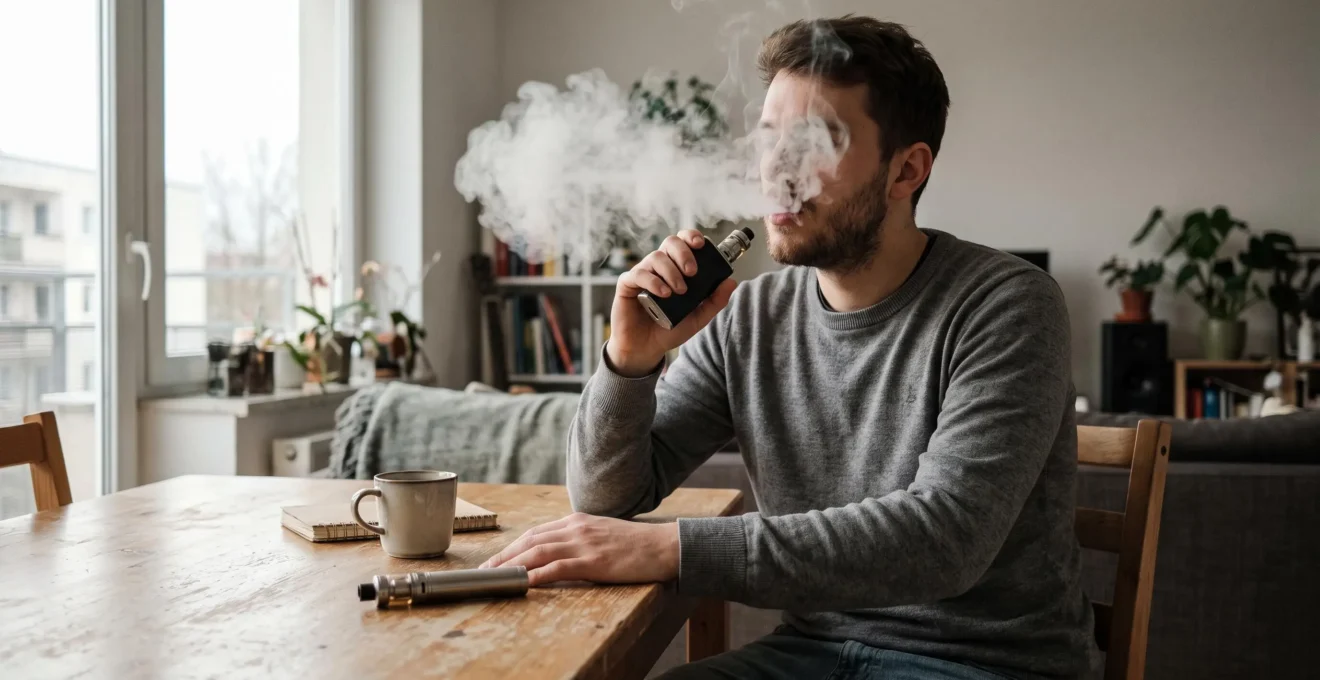
High-airflow vape devices can be practical for everyday use, particularly for experienced adult vapers who prefer a loose, direct-to-lung inhale. However, greater airflow changes more than the sensation of drawing through the mouthpiece. It affects aerosol concentration, coil cooling, the relationship between airflow and electrical power, and potentially the amount of e-liquid consumed.
An open draw typically feels less restrictive than a conventional mouth-to-lung setup. It may accommodate larger inhalations, but a bigger visible cloud does not necessarily mean stronger nicotine delivery or a more satisfying throat hit. Coil resistance, wattage, liquid formulation and puffing behaviour all contribute to those outcomes.
For everyday use, the important question is whether the hardware matches the user’s preferred inhale style, nicotine requirements and maintenance expectations. High-airflow equipment is not automatically better than restricted hardware, and its configuration matters more than cloud size alone. Vaping also involves health risks and is not risk-free; people who do not smoke or vape should not start.
High-airflow vaping: the essential trade-offs
- Open airflow reduces draw restriction but does not guarantee greater nicotine delivery or a stronger throat hit.
- High-power, low-resistance configurations can consume more e-liquid, making running costs and nicotine intake important considerations.
- Everyday suitability depends on matching airflow, coil specifications, wattage, nicotine concentration and inhalation style.
- Why Do High-Airflow Devices Produce a More Open and Airy Draw?
- How Do You Set Up a High-Airflow Vape Without Overpowering the Coil?
- High or Restricted Airflow: Which Better Matches Your Inhale Style?
- Which High-Airflow Setup Errors Can Cause Harshness or Excessive Consumption?
- When Should You Reduce Airflow After Changing Your Vape Setup?
- DTL or MTL: Which Inhale Style Better Fits Your Device and Nicotine Level?
- How Do You Tune Airflow and Wattage for More Consistent Vapour Density?
- How Should Adjustable Wattage Be Set for Consistent Coil Performance?
Why Do High-Airflow Devices Produce a More Open and Airy Draw?
High-airflow devices feel more open because their air intake channels allow inhaled air to pass through with comparatively little resistance. Wider or less obstructed airflow pathways generally reduce the pressure difference needed to achieve a given flow. This produces a looser draw, particularly in hardware designed for direct-to-lung inhalation.
Draw resistance is determined by the entire air pathway, including intake openings, internal passages, the coil chamber and the mouthpiece. Opening an adjustable airflow ring can reduce restriction, but it cannot eliminate bottlenecks elsewhere in the device.
An experimental study on disposable e-cigarette airflow and pressure drop illustrates how strongly resistance can vary between designs. Researchers measured pressure drops of 6–12 mm H2O in the tested button-activated products and 15–67 mm H2O in the airflow-activated models. These results concern older disposable products, not modern adjustable sub-ohm tanks, and should not be treated as direct comparisons of DTL airflow settings.
Airflow also influences how the aerosol mixes with incoming air. A more open setting can produce a cooler, more diluted aerosol under otherwise comparable conditions. However, increasing airflow does not independently guarantee more aerosol mass. Electrical power, liquid delivery, coil design and puff duration remain important.
Sub-ohm coils are frequently incorporated into hardware designed for higher-power operation and open inhalation. Higher-resistance coils are more commonly associated with lower-power, restricted-draw devices. These are design tendencies rather than universal compatibility rules.
A large visible cloud therefore says relatively little about nicotine delivery on its own. Aerosol concentration and throat sensation depend on several interacting factors, not simply the amount of air entering the device.
When vapour feels unusually thin despite a comfortable draw, the next step is to examine the relationship between airflow, coil operating conditions and power rather than assuming the device is defective.
How Do You Set Up a High-Airflow Vape Without Overpowering the Coil?
A high-airflow vape should be configured within the coil manufacturer’s specified operating limits, with airflow and wattage adjusted conservatively. Starting at the lower end of the recommended wattage range and a partially restricted airflow setting provides a controlled baseline. Any changes should be gradual, with attention to excessive heat, unusual taste and coil performance.
The coil’s recommended power range is the primary constraint. Airflow adjustment cannot make wattage above that range safe, nor can unrestricted airflow reliably compensate for inadequate liquid saturation.
Within the approved operating range, an experienced adult user can assess the interaction between air intake and heating:
- Confirm the installed coil is compatible with the tank, device and selected operating mode.
- Check the coil’s printed wattage range and follow the manufacturer’s priming instructions before first use.
- Begin at the lower end of that range with airflow partially open.
- Assess temperature, aerosol density and flavour without exceeding the coil specifications.
- Make small, separate adjustments, stopping if harshness, overheating, leaking or burnt flavour develops.
At a given wattage, opening the airflow can make the aerosol feel cooler and less concentrated. Increasing power may change that experience, but the relationship is not proportional: doubling airflow does not establish a reason to double wattage.
Liquid consumption deserves equal attention. A human study on coil resistance, nicotine delivery and e-liquid consumption involving 32 experienced users found greater liquid consumption with higher-power, lower-resistance configurations. The experiment compared specific coil and power combinations; it did not isolate airflow opening or establish a universal daily consumption rate.
Gurgling and spitback may indicate excess liquid in the coil chamber, particularly when vaporisation does not keep pace with liquid delivery. However, flooding can also result from overfilling, worn seals, unsuitable liquid viscosity or an incorrectly installed coil. Opening the airflow is not a reliable standalone diagnosis or remedy.
Five checks for a controlled high-airflow setup
- Verify compatibility: record the installed coil model, resistance and manufacturer’s approved wattage range.
- Establish a baseline: note the initial wattage and airflow position before making adjustments.
- Check liquid preparation: confirm that the coil was primed according to the manufacturer’s instructions and record any leaking or gurgling.
- Evaluate one change: document aerosol temperature, flavour and any unwanted symptoms after a single adjustment within specifications.
- Review consumption: record tank refills over a normal observation period and compare them with the previous setup.
The aim is stable operation within manufacturer limits, not the largest possible cloud. Once the equipment is working predictably, inhalation preference becomes the next deciding factor.
High or Restricted Airflow: Which Better Matches Your Inhale Style?
High airflow generally suits adults already comfortable with direct-to-lung inhalation, whereas restricted airflow provides more tactile resistance and is often familiar to people accustomed to cigarette-style draws. Neither approach is inherently preferable for daily use. Comfort, nicotine formulation, coil compatibility and liquid consumption matter more than the size of the airflow opening.
Restricted draws allow users to feel a clearer resistance when inhaling. Open draws provide less resistance and are generally designed around a continuous inhalation into the lungs.
A middle option, restricted direct-to-lung (RDL), combines a relatively open inhale with greater resistance than a conventional wide-open DTL setup. Hardware designed for RDL typically provides an intermediate airflow pathway and a coil suitable for its intended power range.
The following comparison describes common hardware tendencies rather than mandatory operating rules.
| Criterion | High airflow | Restricted airflow |
|---|---|---|
| Draw sensation | Loose, airy, relatively low resistance | Tighter, more noticeable resistance |
| Typical inhale style | DTL | MTL or restricted DTL |
| Common hardware | Higher-power, low-resistance coil systems | Lower-power coils or intermediate RDL hardware |
| Vapour character | Potentially greater aerosol output depending on operating conditions | Often less aerosol output in lower-power configurations |
| Liquid consumption | Can be greater with high-power setups | Often lower with appropriately matched low-power setups |
| Primary consideration | Power, coil cooling and nicotine delivery | Draw comfort and nicotine suitability |
Nicotine strength introduces another important variable. Higher nicotine concentrations may create an unpleasant throat sensation in some high-output DTL configurations. Lower concentrations are commonly associated with such devices, while stronger liquids are frequently used in lower-power restricted systems. These patterns are not universal dosing recommendations.
Nicotine salts and freebase nicotine also differ in sensory characteristics, but the appropriate choice cannot be determined by airflow alone. Nicotine dependence, formulation, device performance and actual exposure all matter.
For someone who finds both conventional MTL and fully open DTL uncomfortable, an RDL-compatible device may offer a more manageable draw. The equipment must be designed to support the chosen style rather than simply having its airflow forced almost shut.
Whichever style feels familiar, everyday comfort can deteriorate when configuration errors cause overheating, excessive liquid use or unpredictable nicotine exposure.
Which High-Airflow Setup Errors Can Cause Harshness or Excessive Consumption?
Common high-airflow setup problems include operating a coil outside its recommended wattage range, failing to saturate a replacement coil, using an unsuitable nicotine concentration and taking repeated puffs faster than the wick can replenish liquid. These faults can produce thin aerosol, gurgling, harshness, overheated vapour, burnt flavour or unnecessary e-liquid consumption.
Symptoms are useful diagnostic clues, but they do not identify a single cause with certainty.
- Weak or thin aerosol: may result from relatively high dilution at the selected power, depleted liquid, an ageing coil or inadequate electrical output.
- Burnt or dry taste: suggests that the wick may not be supplying liquid adequately for the operating conditions, or that the coil is damaged.
- Gurgling and spitback: can arise from excess liquid entering the coil chamber, damaged seals, incorrect filling or insufficient vaporisation.
- Excessive heat: may indicate excessive power for the coil, inadequate cooling, poor liquid saturation or repeated use without sufficient recovery.
- Unpleasant throat harshness: may involve nicotine concentration, formulation, aerosol temperature, inhalation characteristics or coil condition.
Harshness deserves particular care because it is not simply evidence of too little airflow. Clinical research on nicotine formulation and DTL throat hit, combining mathematical modelling with clinical measurements, examined how nicotine concentration, nicotine form, aerosol temperature and inhalation rate affect throat nicotine absorption. The relationship between predicted throat absorption and reported harshness had a correlation of r = 0.62 in the analysed clinical data.
That finding supports a multifactor explanation of throat sensation. It does not justify choosing a universal nicotine concentration or treating airflow changes as a substitute for addressing excessive nicotine exposure.
E-liquid consumption should be assessed over comparable periods rather than through an assumed millilitre-per-day benchmark. Record the number and volume of refills, the frequency of coil replacement and any major changes in device use. Comparing a week of familiar restricted vaping with a similar period using a high-airflow device can reveal the practical difference, although it cannot isolate airflow from power or puffing behaviour.
Greater liquid use may also affect nicotine exposure. The quantity of nicotine contained in consumed liquid is not equivalent to the quantity absorbed by the body, yet higher consumption and more frequent puffing can contribute to greater exposure under some conditions.
Persistent burnt flavour, leakage, overheating or unexplained irritation warrants stopping use and inspecting or replacing the affected components according to the manufacturer’s guidance, rather than compensating with additional power.
Once the equipment has been checked, a more restricted airflow setting may be appropriate, particularly after changing the liquid, coil or preferred inhalation style.
When Should You Reduce Airflow After Changing Your Vape Setup?
Reducing airflow is worth considering when an open draw feels excessively loose, aerosol becomes thin, or a replacement coil is designed for a more restricted inhale. A change in nicotine formulation or concentration can also justify reassessing the setup. Airflow should be adjusted gradually within the device’s operating specifications, not used to compensate for unsafe wattage or persistent irritation.
A particularly important trigger is replacing a low-resistance DTL coil with a higher-resistance model intended for restricted operation. The new coil may have different heating, wicking and cooling requirements, so retaining the former airflow and wattage settings can produce an unsuitable experience.
Other reasons to reassess the airflow include:
- Flavour becoming muted after opening the air intake.
- A new e-liquid producing an unexpectedly harsh sensation.
- A change in preferred inhale style from DTL towards RDL.
- Repeated use of more liquid than anticipated.
- A newly fitted coil behaving differently from the previous one.
A conservative adjustment process begins by verifying the new coil’s recommended wattage range. Reset power to an appropriate point within that range, establish a compatible airflow position, and change one setting at a time. A more restricted air channel can make vapour feel warmer at an unchanged power level, so any temperature increase is a reason to reassess the configuration rather than continue automatically.
Importantly, closing the airflow does not directly guarantee lower liquid consumption. Total consumption depends on heating power, puff frequency, puff duration and liquid delivery. If reducing airflow also changes how the device is used, the resulting consumption may change, but it should be measured rather than assumed.
Similarly, restricting airflow does not make an excessively strong nicotine liquid appropriate for every device. The nicotine formulation and concentration must remain compatible with the operating conditions and the user’s circumstances.
The longer-term benefit is flexibility: an adjustable device can accommodate some changes in preference, provided that its hardware supports the intended inhalation style.
DTL or MTL: Which Inhale Style Better Fits Your Device and Nicotine Level?
Direct-to-lung (DTL) inhalation draws aerosol into the lungs in one relatively continuous breath and generally requires an open airflow path. Mouth-to-lung (MTL) inhalation first draws aerosol into the mouth before inhalation, typically using a more restricted device. The appropriate style depends on hardware design, nicotine formulation, draw familiarity and personal comfort.
The distinction is mechanical as well as behavioural. DTL users generally rely on devices capable of supplying and cooling aerosol during a comparatively open inhale. MTL users typically use lower-power hardware with greater draw resistance.
RDL is an intermediate inhalation style. It retains the single-stage DTL approach while offering more resistance, sometimes making it suitable for users who find fully open DTL equipment uncomfortable.
The following matrix describes common associations rather than strict thresholds or medical recommendations.
| Feature | MTL | RDL | DTL |
|---|---|---|---|
| Inhalation | Mouth first, then lungs | Direct inhale with moderate restriction | Direct inhale with low restriction |
| Airflow | Restricted | Intermediate | Open |
| Common coil design | Higher resistance, lower power | Intermediate resistance and power | Often sub-ohm, higher power |
| Nicotine formulation | Often used with higher-strength liquids, including salts | Depends on device and exposure requirements | Commonly used with lower nicotine concentrations |
| Draw familiarity | Closer to cigarette-style inhalation | Intermediate sensation | More like a continuous breath |
These distinctions help explain why moving directly from cigarette smoking to wide-open DTL hardware can feel unfamiliar. A smoker accustomed to a pronounced draw resistance may perceive an open device as unsatisfying even when it produces considerable aerosol. However, the evidence supplied here does not establish how frequently this preference causes people to abandon vaping.
Nicotine delivery also complicates the comparison. In the controlled human experiment described earlier, delivery varied with both nicotine concentration and coil-power configuration. The strongest measured delivery occurred in the tested higher-nicotine, lower-resistance condition, demonstrating why coil resistance alone cannot determine exposure.
For adults using vaping as an alternative to smoking, choosing familiar, manageable equipment and avoiding simultaneous cigarette use may be more relevant than increasing cloud production. Those who need individual guidance on nicotine dependence or reducing nicotine use can consult an appropriately qualified healthcare professional or smoking cessation service.
After choosing an appropriate inhalation style, consistent performance depends on maintaining a workable relationship between airflow, electrical power and liquid supply.
How Do You Tune Airflow and Wattage for More Consistent Vapour Density?
Consistent vapour density depends on balancing airflow, coil heating and e-liquid delivery without exceeding the manufacturer’s operating limits. Opening the airflow can dilute and cool aerosol, while changing wattage affects heating and vaporisation. The most reliable assessment method is to establish a compatible baseline and adjust one variable at a time, watching for unwanted changes.
Airflow and wattage are related, but they are not interchangeable. The amount of aerosol generated depends on how effectively the coil vaporises supplied liquid, while the amount of incoming air influences its dilution, transport and temperature.
Increasing power can change aerosol production, but there is no universal formula for compensating for a larger airflow opening. The effect depends on the specific coil, chamber geometry, liquid and inhalation conditions.
Experimental work on sub-ohm airflow and liquid consumption investigated these interactions using adjustable air vents and different puff volumes. In the tested configurations, liquid consumption per puff increased as puff volume rose from 50 to 100 mL, before remaining comparatively stable at larger tested volumes. The study also examined aldehyde emissions, illustrating why aerosol output should not be optimised without regard to operating conditions and potential exposure.
Changes in aerosol density over time may have several causes:
- Coil ageing: deposits and wick deterioration can alter heating and liquid delivery.
- E-liquid level: insufficient liquid or altered saturation can affect performance.
- Battery condition: depleted batteries or output limitations may change actual heating performance, depending on device regulation.
- Liquid composition: differences in propylene glycol (PG), vegetable glycerine (VG) and other ingredients can affect viscosity and wicking.
- Puffing behaviour: longer, more frequent or stronger draws can change heating and cooling conditions.
For example, thin aerosol with reduced flavour might result from an unusually open airflow setting, but it could also indicate a deteriorating coil. Conversely, hot, dense aerosol could reflect excessive heating relative to the available cooling airflow.
High-VG liquids can wick more slowly in certain coil designs because of their viscosity. Changing liquids therefore calls for checking the manufacturer’s compatibility recommendations, not automatically raising power.
The practical objective is a stable, acceptable result within the equipment’s intended specifications. If achieving that result requires operating outside the recommended range, the coil or device may be unsuitable for the desired airflow style.
The final operating variable is wattage discipline: understanding what the coil is designed to tolerate and recognising when adjustment is no longer an appropriate substitute for maintenance.
Key takeaways before adjusting wattage
- Treat the coil’s manufacturer-specified power range as the operating boundary, regardless of airflow preference.
- Distinguish normal differences in aerosol concentration from warning signs such as burning, persistent gurgling or overheating.
- Reassess coil condition and liquid compatibility before using power changes to compensate for declining performance.
How Should Adjustable Wattage Be Set for Consistent Coil Performance?
Adjustable wattage should be set according to the installed coil’s manufacturer-recommended operating range, starting conservatively and remaining within that range. Airflow, liquid compatibility and coil condition should then be considered together. Stable performance comes from appropriate heating and liquid saturation, not from repeatedly increasing power to maintain a particular cloud size.
A coil’s printed wattage range reflects its intended heating and liquid-delivery characteristics. Although the exact range varies between products, it provides a more reliable reference than a setting copied from another device or an online discussion.
Operating below the recommended range may produce weak aerosol or incomplete vaporisation under some conditions. This can contribute to gurgling when liquid accumulates faster than it is vaporised, although low power alone does not prove that a coil is flooded.
Exceeding the specified range is more concerning. Excessive heating can overwhelm liquid supply, produce dry or burnt hits and accelerate coil deterioration. Airflow cannot reliably eliminate those risks, and visible aerosol production is not an adequate safety indicator.
Coil condition also changes during use. Deposits, wick deterioration and variations in liquid saturation may alter the experience. However, ageing does not establish that a coil needs progressively higher power. A persistent decline in flavour or performance can be a reason to replace the coil rather than increase wattage.
Consider a hypothetical device fitted with a manufacturer-approved adjustable-power coil. Its owner experiences reduced flavour after several days of normal use. If the airflow and liquid remain unchanged, inspecting the coil, checking saturation and comparing actual power with the specified range should come before any decision to increase output. If the coil is burnt or deteriorated, replacement is preferable to compensating through greater heating.
For daily operation, a simple record of coil type, compatible liquid, usual wattage, airflow position and replacement dates can help separate normal wear from configuration problems. Consumption records provide an additional indication of whether the device remains practical over time.
Consistent operation does not mean eliminating every variation in aerosol output. It means avoiding unsupported adjustments, recognising equipment limitations and responding appropriately when the device behaves differently.
For a practical next step, review the current coil specifications, record the existing device settings and monitor liquid consumption over a comparable period. If open airflow consistently requires uncomfortable inhalation or unsuitable operating conditions, consider hardware designed for a more restricted draw rather than trying to force the existing setup to perform differently.
Does a high-airflow vape always consume more e-liquid?
No. Higher-power, lower-resistance setups can consume more liquid, as demonstrated in controlled experimental research, but opening an airflow ring alone does not guarantee an increase. Consumption depends on coil design, power, puffing behaviour and liquid delivery. Compare refill volumes over similar periods to assess a particular setup.
Can a large vapour cloud indicate excessive nicotine exposure?
Cloud size is not a reliable measure of absorbed nicotine. Nicotine delivery depends on liquid concentration, formulation, power, coil characteristics and inhalation behaviour. A high-output device used frequently may increase exposure even when the liquid has a relatively low nicotine concentration.
Can a high-airflow tank be used with a restricted inhale?
Some adjustable tanks support restricted direct-to-lung use, but not every high-airflow tank is designed for mouth-to-lung inhalation. Compatibility depends on the airflow pathway, installed coil and permitted operating range. Closing the airflow almost completely does not necessarily make a DTL coil suitable for MTL use.
Should wattage be increased when a coil starts losing flavour?
Not automatically. Reduced flavour can reflect coil ageing, residue, insufficient liquid delivery or changes in the liquid itself. Inspect the device and remain within its recommended operating limits. If deterioration persists, replacing the coil may be more appropriate than increasing power.
Is high-airflow vaping safer because the aerosol is more diluted?
No such conclusion can be drawn from aerosol dilution alone. Airflow, heating conditions, liquid composition and inhalation behaviour can influence emissions and exposure in different ways. A cooler or less concentrated sensation does not demonstrate lower health risk. Vaping is not risk-free, and people who do not already smoke or vape should not begin using nicotine products.